When Whole Foods announced it will require all of the products on its shelves to have their GMO contents labeled by 2018, the company framed it as an issue of transparency. “People have the right to know what is in their food,” said Whole Foods co-CEO John Mackey, quoting the favorite catchphrase of GMO labeling activists. Unfortunately, GMO labeling is likely to achieve exactly the opposite of transparency.
First, it’s worth noting that there’s nothing altruistic about the store’s new policy. Roughly half of consumers say they believe GMO labeling is desirable—that’s a significant business opportunity for food retailers. Or in the words of Businessweek’s Susan Berfield, “Transparency is something worth paying for these days.” Whole Foods also has a public image to fix. The Organic Consumers Association pointed out, in response to last week’s announcement, that
Whole Foods came under fire last year when the company dragged its feet in supporting Proposition 37, California’s Right to Know GMO Labeling citizens’ initiative. In October, CEO John Mackey confirmed in a blog post that Whole Foods stores knowingly sell Monsanto’s genetically modified corn, without labeling it.
For clarity’s sake, the FDA only approves labels that address a food’s safety concerns, nutrition content or physical properties. There is no scientific evidence that GMO labeling harms consumers or differs from organic or “natural” foods in any way, and so the FDA has ruled that GMO labeling mandates would be an unnecessary expense that would only result in confused customers. “Similar to informing [consumers] about whether a fruit or vegetable was hand- or machine-picked, telling them only that a product was ‘genetically engineered’ conveys no useful information,” writes former FDA official Henry Miller.

Instead, GMO labels convey exactly the wrong information. Anti-GMO activist Mike Adams from Natural News gleefully writes that Whole Foods’ new policies will drive thousands of food manufacturers to seek out new non-GMO supply chains because “To carry an admission of GMOs on your label is to commit brand suicide. It’s the equivalent of saying, ‘This product is intentionally formulated with poison.’”
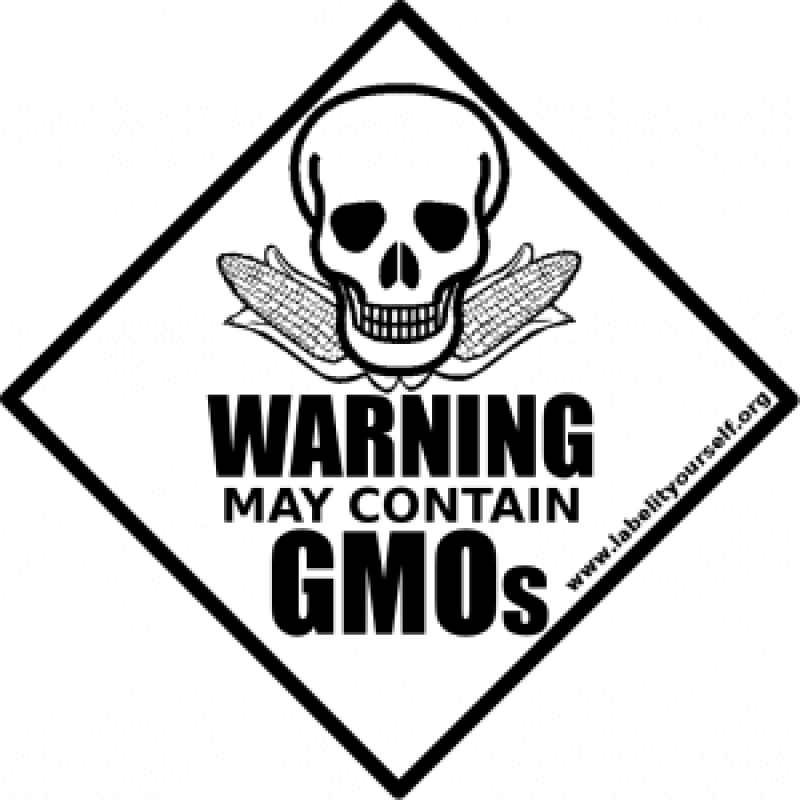
In the U.S., GMOs are part of nearly everyone’s daily staple diet. For uneducated consumers, a GMO label is akin to putting a skull and crossbones on a product. Perhaps those consumers will be persuaded to buy “natural” GMO-free products, and pay twice as much for exactly the same product. For groups that are shelling out huge amounts of money to make GMO labeling mandatory—including the Organic Consumers Association, PCC Natural Markets, and Nature’s Path—that’s exactly what they’re hoping for. It would be a return on investment.