Genetically modified rice could help address China’s smog problems

China Pollution Touri web t

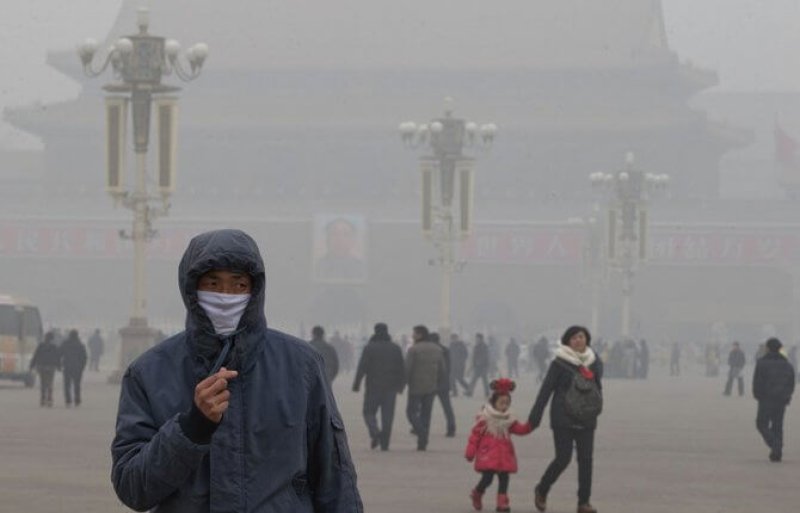
Chinese scientists have found a way to change the genetic make-up of a popular species of rice, a move they claim could ease the countryโ€™s chronic smog problemย by lowering the amount of fertilisers containing nitrogen that farmers use.

China suffers from more severe nitrogen pollution than any other country.ย Although it has just 7 per cent of the worldโ€™s farm land, Chinaย consumes over one-third, or 35 per cent, of the worldโ€™s nitrogen fertilisers. Such agricultural usage has led to massive pollution of the country’s soil, water and air.

Chinese rice, especially the japonica subspecies grown in northern provinces like Heilongjiang, requires heavy use of fertilisers because of the poor rate at which it absorbs nitride from soil and water. Plants need nitride in order to grow healthily.

Now scientists claim to have unlocked the problem by cloning a gene called NRT1 from indica rice and inserting itย into the japonica’sย genetic sequence. This boosts the rate at which the rice can absorb nitride by more than one-third.

The breakthrough, published in the latest issue of the journalย Nature Genetics, was hailed as โ€œa great discoveryโ€ by an anonymous peer reviewer.ย The transplantation of the nitric booster gene โ€œhad significantly improved grain yield and nitrogen use efficiency,โ€ they added.

The GLP aggregated and excerpted this blog/article to reflect the diversity of news, opinion and analysis. Read full, original post:ย Modified rice may help combat Chinaโ€™s smog problem, Chinese scientists claim

{{ reviewsTotal }}{{ options.labels.singularReviewCountLabel }}
{{ reviewsTotal }}{{ options.labels.pluralReviewCountLabel }}
{{ options.labels.newReviewButton }}
{{ userData.canReview.message }}

Related Articles

Infographic: Global regulatory and health research agencies on whether glyphosate causes cancer

Infographic: Global regulatory and health research agencies on whether glyphosate causes cancer

Does glyphosateโ€”the world's most heavily-used herbicideโ€”pose serious harm to humans? Is it carcinogenic? Those issues are of both legal and ...

Most Popular

ChatGPT Image Jun 3, 2026, 03_14_43 PM
Viewpoint: How Earthjustice became the poster child for the abuse of special interest activist funding
ChatGPT Image Jun 3, 2026, 03_54_37 PM
Viewpoint: โ€œTurn on, tune in, drop outโ€โ€”Kennedy embraces the Timothy Leary psychedelic revolution
Screenshot-2026-06-05-at-2.12.30-PM
Some plants can poison you. So how did humans figure out what is safe to eat?
ChatGPT-Image-Jun-11-2026-01_15_03-PM
Selective Pressure, Selective Silence
Screenshot 2026-05-26 at 10.15
Viewpoint: Double standardโ€”Why does the wellness industry get a free pass while Big Healthcare is treated as morally suspect?
ChatGPT-Image-Mar-10-2026-01_39_01-PM
Viewpointโ€”โ€œMiracle moleculeโ€ debunked: Why acemannan supplements donโ€™t work
ChatGPT Image Jun 1, 2026, 11_39_17 AM
Viewpoint: When food myths go viral, farmers pay the price
ChatGPT Image May 28, 2026, 08_16_38 PM
Viewpoint: Why the EPA mismeasures cancer risk of chemicals and what should be done to fix it
ChatGPT Image May 26, 2026, 08_42_17 AM (1)
Viewpoint: Greenpeace and poison: How environmental advocacy groups rely on compliant (and often ignorant) journalists to spread disinformation and spark litigation
Screenshot-2026-06-03-at-1.24.46-PM
Challenging anti-GMO disinformation: Why genetically-tweaked crops offer bushels of benefits

Sorry. No data so far.

glp menu logo outlined

Get news on human & agricultural genetics and biotechnology delivered to your inbox.