
More than 90 percent of the 18 million growers that produced biotech crops were resource-poor farmers in developing countries. Since the commercial introduction of GM crops in 1994, their global acreage has increased 100-fold, to over 175 million hectares, or about one-eighth of Earth’s farmable land.
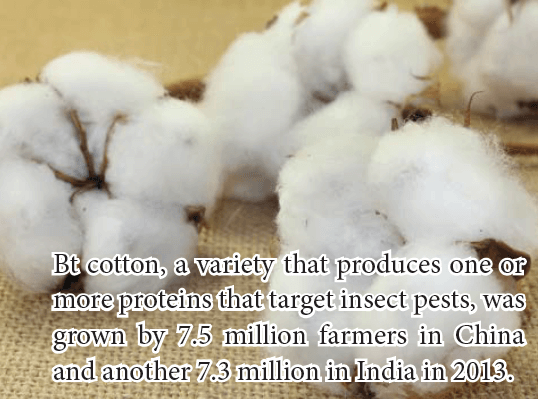
Genetically Modified foods are not grown in India, but more than 90 percent of the country’s cotton acreage is genetically engineered to produce Bt insecticidal proteins. Farming of Bt cotton officially began in 2002–2003. Over the next five years, yields increased by 70 percent and have since stabilized at near-historic levels, with cotton production up 75 percent since Bt cotton’s official introduction. Other factors, including irrigation and fertilizer use, have also changed, so Bt cotton is not India’s only source of yield improvements. Still, data indicate that Bt cotton alone accounts for a yield increase of at least 19 percent. Once reliant on cotton imports to feed its textile industry, India now exports cotton.
More than 90 percent of the 18 million growers that produced biotech crops were resource-poor farmers in developing countries. Since the commercial introduction of GM crops in 1994, their global acreage has increased 100-fold, to over 175 million hectares, or about one-eighth of Earth’s farmable land.

Genetically Modified foods are not grown in India, but more than 90 percent of the country’s cotton acreage is genetically engineered to produce Bt insecticidal proteins. Farming of Bt cotton officially began in 2002–2003. Over the next five years, yields increased by 70 percent and have since stabilized at near-historic levels, with cotton production up 75 percent since Bt cotton’s official introduction. Other factors, including irrigation and fertilizer use, have also changed, so Bt cotton is not India’s only source of yield improvements. Still, data indicate that Bt cotton alone accounts for a yield increase of at least 19 percent. Once reliant on cotton imports to feed its textile industry, India now exports cotton.
While Bt cotton’s production costs are higher than conventional cotton because GM seeds cost more, these costs are offset by increased yields and reduced use of pesticides. Bt cotton growers have seen a 50 percent average increase in profits, or an estimated $80 to $350 more per hectare. Because Bt hybrid seed offers reliably improved harvests, most farmers are willing to pay for it each year, even though Indian law gives farmers the right to sow, share, or sell seeds that they’ve saved.