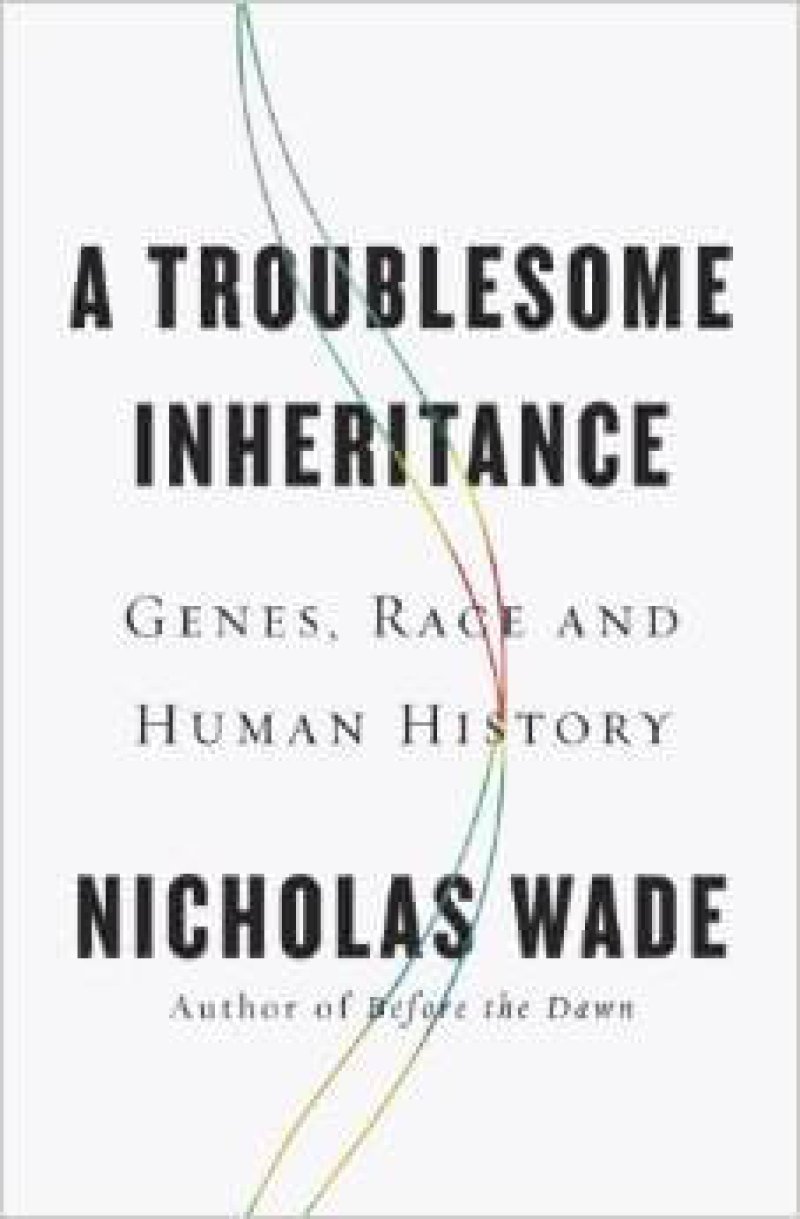
Since it’s publication this spring. Nicolas Wade’s A Troublesome Inheritance has become widespread controversy fodder within the fields of population genetics and science journalism. The book claims that evolutionary selection is responsible for behavioral differences between races, which in turn led to the rise of Western societies.
Now, more than 130 population geneticists, some cited by Wade in the book, have issued a public statement, published August 8 online at the New York Times (and here in full) that disputes the existence of evidence linking genetic adaptation and behavior and condemning Wade’s interpretations of the research:
Wade juxtaposes an incomplete and inaccurate account of our research on human genetic differences with speculation that recent natural selection has led to worldwide differences in I.Q. test results, political institutions and economic development. We reject Wade’s implication that our findings substantiate his guesswork. They do not.
The scientists point to David Dobbs’ in depth critique of Wade’s book, which draws from the original genetic studies used by Wae. In one example, Dobbs describes a 2008 paper that shows that genomes sort by geography at many different regional scales, ‘just as just as two people from a particular place will most likely speak with similar accents.’ But Wade uses this same study to say that those geographical distinctions of genomes relate to behavior and are proof of genetic selection. But that’s not at all what the paper found Dobbs writes:
The paper’s authors specifically state that while selection may sometimes create genetic differences between populations, they saw little evidence that selection shaped the small genetic differences they found. In fact, they say the differences can be largely explained by “random drift” — arbitrary changes in genes having little to no effect on people’s biology or behavior. All of this directly contradicts Wade’s argument. Yet he baldly claims the study as support.
And he does this sort of thing repeatedly: He constantly gathers up long shots, speculations and spurious claims, then declares they add up to substantiate his case.
The scientific community largely agrees that Wade oversteps when making any claims about race, genetics and behavior, largely because evidence linking genetics and human behavior is so new and somewhat fragile. Even linking genes to major mental health disorders, like schizophrenia, is contentious. Relating genes to a more qualitative characteristic, like aggressiveness or social obedience seems rather an overreach. University of Pennsylvania geneticist Sarah Tishkoff has found some evidence of genetic difference in race in regard to lactose digestion among certain populations, but told Nature that’s about as far a connection as she can make:

Tishkoff scoffs at the idea, proposed by Wade, that natural selection has shaped cognitive and behavioural differences between populations around the world. “We don’t have any strong candidates for playing a role in behaviour,” she says.
Wade for his part has issued a statement about the scientific rebuke, calling it politically driven and saying many of his critics have not actually read the book:
“A Troublesome Inheritance” argues that opposition to racism should be bee don principal not on the anti-evolutionary myth that there is no biological basis to race… “A Troublesome Inheritance” seeks to explain how race can be understood without racism, a problem increasingly posed by the advances in understanding the human genome.
Additional Resources:
- Troublesome genetics and race, Tabitha M. Powledge, Genetic Literacy Project
- Book Review: ‘A Troublesome Inheritance’ by Nicholas Wade, Charles Murray, Wall Street Journal
- On the Origin of White Power, Eric Michael Johnson, Scientific American