A new study shows that Tibetan people who live at high altitudes have a gene variant inherited from our ancient relatives the Denisovans, a now extinct early hominid species discovered just four years ago. The gene helps them maximize oxygen use in their bodies without over-producing red blood cells, increasing the risk of stroke.
We’ve known for sometime that ancient humans and Neanderthals had sex with each other, and in doing so, exchanged genes. Some of those genes stuck with homo sapiens and are still with us today. Just four years ago, anthropologists discovered another ancient hominin species, the Denisovans.
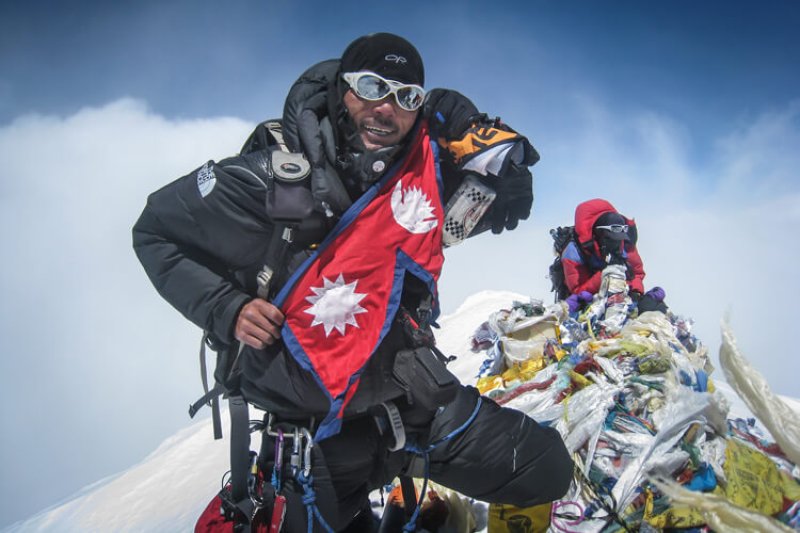
The study adds to the story that we mated with them, too. The evidence? The majority of Tibetan people share gene variant EPAS1, that helps them to live in the extreme high altitudes of the Himalayan mountains where oxygen levels are low. The same gene is extremely rare in the Nepalese people’s closest related group the Han of China, even though the peoples only really separated 4,000 years ago.
So where does this relatively rare variant come from? The enigmatic and unknown Denisovans says Rasmus Nielsen of the University of California Berkley. We don’t know much about our hominid ancestor, but we do know their DNA Ed Yong explains:
This discovery is all the more astonishing because we still have absolutely no idea what the Denisovans looked like. The only fossils that we have are a finger bone, a toe, and two teeth. Just by sequencing DNA from these fragments, scientists divined the existence of this previously unknown group of humans, deciphered their entire genome, and showed how their genes live on in modern people.
On their way out of African homo sapiens likely bred with Denisovans somewhere in central Asia where some of the progeny picked up the EPAS1 mutation. For those homo sapiens that migrated to high altitudes, the gene variant was advantageous, so it spread quickly through the population and just kept going. “What we’re learning from ancient genomes is that while each of them may have contributed only a little to our ancestry, those genetic streams were full of tiny golden nuggets of useful genes,” anthropologist John Hawks told Yong.

There is precedent for this kind of interspecies breeding in hominids with direct, beneficial genetic effect, Catherine Brahic points out:
Humans interbred with Neanderthals soon after moving out of Africa, when we were ill-equipped to cope with Eurasian diseases. However Neanderthals had been hanging out in Europe and Asia for much longer, so their immune systems had adapted. There is evidence that humans snagged some of the Neanderthals’ immunity genes when the two mated, perhaps helping us to spread across the planet.
Our ability to look at genes alongside more traditional features like fossils and migration patterns will keep speeding up exploration of our early history. And, as in this study, it will also show us that for at least part of that history, we were just one of several early human groups. Hopefully, these technologies will also help us explain they mystery of our ancient cousins’ demise.
Additional Resources:
- Neanderthals Are People, Too, Svante Paabo, New York Times
- Genome of ancient Denisovans may help clarify human evolution, Rosie Mestel, Los Angeles Times
- Interbreeding Among Early Hominins, Lisa Winter, I Fucking Love Science