What is direct to consumer genetic testing actually worth?

b a z
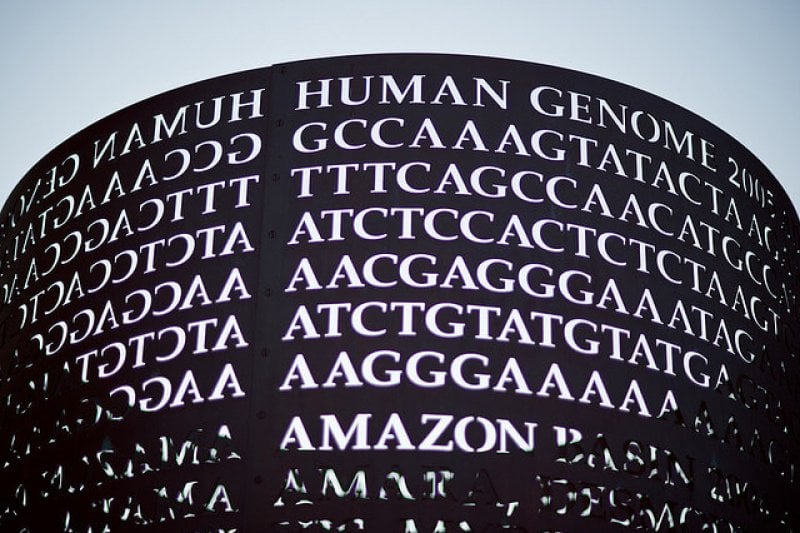
(Credit: Dave Fayram/Flickr)

It’s a situation many have faced before or will in the future: last month, I was up early waiting for a call and a medical update. Unfortunately, the news wasn’t great: a doctor said I had an elevated risk—around two to three times higher than the average person—of developing late-onset Alzheimer’s disease.

On the bright side, this news was complicated.

My regular physician or local hospital didn’t deliver the diagnosis. Instead, a doctor from Turkey contacted me on Skype to go through a detailed analysis of my DNA. Because of some family history with early onset Alzheimer’s and an interest in what’s becoming an emerging field, I sought out some direct-to-consumer (DTC) genetic testing within the last six months. Turns out that these days, it takes nothing more than some money and a mailed spit sample to get a routine DNA exam; a brief glimpse at fate is then conveniently sent to your inbox.

The conclusion these DTC genetics companies draw, if you dig down into the data enough, comes with a number of subtle caveats and complicating factors. While it’s true I have a somewhat increased risk for Alzheimer’s, I already knew that I should eat healthily and exercise regularly. To some extent, my genetic fate was sealed from the moment I was conceived—I can’t change the fact that I have that pesky allele. Yet, there still seems to be an overwhelming likelihood that I won’t develop Alzheimer’s according to these test odds and the uncertainty behind them. Why bother at all with DTC genetics?

Read the full, original story: I had my DNA analyzed, and all I got was this lousy story

Additional Resources: 

{{ reviewsTotal }}{{ options.labels.singularReviewCountLabel }}
{{ reviewsTotal }}{{ options.labels.pluralReviewCountLabel }}
{{ options.labels.newReviewButton }}
{{ userData.canReview.message }}

Related Articles

Infographic: Global regulatory and health research agencies on whether glyphosate causes cancer

Infographic: Global regulatory and health research agencies on whether glyphosate causes cancer

Does glyphosate—the world's most heavily-used herbicide—pose serious harm to humans? Is it carcinogenic? Those issues are of both legal and ...

Most Popular

Screenshot 2025-08-25 203032
Mazzenga’s 20-year old muscles: How a still-going-strong 92-year old sprinter wins every race she enters
Screenshot-2026-06-08-at-10.19.30-AM
‘Natural’ wellness supplements linked to liver injury
ChatGPT-Image-May-28-2026-12_56_54-PM
Viewpoint: Vaccines' non-specific effects? The ‘shoddy’ Danish couple whose 'research’ inspires RFK, Jr.’s health delusion
Screenshot-2026-06-05-at-2.12.30-PM
Some plants can poison you. So how did humans figure out what is safe to eat?
Screen Shot at AM
Facts & Fallacies Podcast: Right-wing politics bad for your health? Separating speculation from science
Credit: ACSH
Viewpoint: Who and what’s to blame for the surge in vaccine-preventable diseases?
Screenshot-2026-06-05-at-1.44.09-PM
Viewpoint: Scientists have scrapped the worst-case climate scenario. Is that proof that climate change is a hoax, as Trump claims?
ChatGPT-Image-Jun-9-2026-03_24_05-PM
Misinformed parents overdosing children with Vitamin A to fight measles
Screenshot 2025-07-30 at 10.48
Can gene editing eliminate Down syndrome? Scientists have done it in lab-grown cells
ChatGPT-Image-Mar-10-2026-01_39_01-PM
Viewpoint—“Miracle molecule” debunked: Why acemannan supplements don’t work
ChatGPT-Image-Jun-9-2026-11_54_59-AM
Why weight-loss drugs might be reducing cancer rates and making treatment more effective
ChatGPT-Image-Jun-9-2026-12_30_14-PM
The ‘low-quality’, retracted studies RFK, Jr. and MAHA rely on for anti-vaccine claims
glp menu logo outlined

Get news on human & agricultural genetics and biotechnology delivered to your inbox.