“Agricultural technology has been central in “making the country self-sufficient in food production,” says Bangladesh’s Agriculture Minister Matia Chowdhurry.
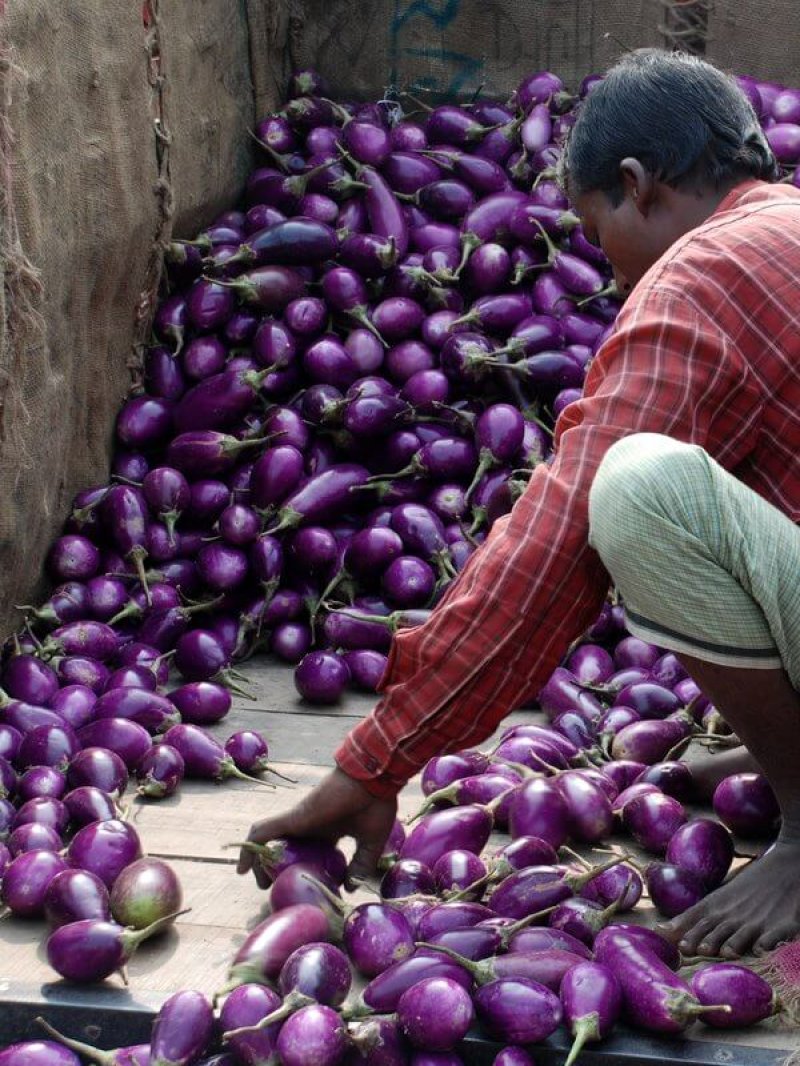
The country began adopting hybrid seeds in the mid-1990s, and in 2013 became the first nation to commercialize insect resistant Bt brinjal (eggplant). Currently, there are about 6,000 farmers cultivating four varieties of the crop. Adoption has resulted in an 80%-90% reduction in insecticide use by the farmers who plant the crop.
The innovation is crucial, say agricultural experts, to feed a growing population which is expected to increase from 164.8 million to 265.4 million by 2050.
The success of Bt brinjal, which was developed by Feed the Future South Asia Eggplant Improvement Partnership, which includes the Bangladesh Agricultural Research Institute (BARI), University of the Philippines Los Banos, Cornell University, Alliance for Science and United States Agency for International Development, has prompted the government to sanction field testing of a GM disease-resistant potato, Bt cotton and Golden rice.
There is also active research on other GM crops. BARI is working on a GM tomato resistant to the leaf curl virus. The Department of Biochemistry and Molecular Biology at Dhaka University is conducting a contained trial in a transgenic greenhouse at a BARI facility to develop salt-tolerant rice and the Department of Botany at Dhaka University is doing research on GM fungal resistant peanuts, lentils and chickpeas, as well as a mung bean resistant to yellow mosaic virus.
GM potato seen as key
The field testing of a late blight-resistant GM potato, developed by BARI, has been so successful that the institute has petitioned the government to allow commercialization to begin later in 2017. Late blight was responsible for decimating the potato crop in Ireland in the 19th century, resulting in more than one million deaths from starvation.
The potato crop is of particular importance considering that Bangladesh is the seventh largest potato producer in the world, growing about 9 million tons a year. Every year farmers spray about 500 tons of fungicide to protect the crop. The disease affects more than 3 million hectares of potatoes globally and causes losses of $2.75 billion a year. The introduction of the RB potato is expected to reduce the need to spray, cutting one of the major costs for small farmers.
The cultivation of Bt cotton could have a significant impact on the economy, as cotton is the dominant import. It is used in the clothing industry which is responsible for the bulk of the country’s exports. Bangladesh is the second largest exporter of apparel and clothing after China.
In 2015 when Bt cotton trials began, Cotton Development Board (CDB) Executive Director Farid Uddin predicted GM cotton would be in the hands of farmers in three years. “Bt cotton has the potential to increase the yields up to 20 percent and enhance fiber quality,” he said.
The CDB hopes to produce one million bales of cotton by 2020, largely as a result of the introduction of Bt cotton. At present Bangladesh produces only 150,000 bales and imports over 5 million bales.

The commercialization of Vitamin A enhanced rice, which has undergone field testing since 2013, could have a tremendous benefit in curbing the detrimental health impact of Vitamin A deficiency. An article in the Daily Star noted:
Consumption of only 150 gram of Golden Rice a day is expected to supply half of the recommended daily intake of vitamin A for an adult. People in Bangladesh depend on rice for 70 percent of their daily calorie intakes. According to World Health Organization global database on Vitamin A deficiency (VAD), one in every five pre-school children in Bangladesh is Vitamin A-deficient. Among pregnant women, 23.7 percent suffer the deficiency. The International Rice Research Institute says VAD is the main cause of preventable blindness in children and globally, some 6.7 million children die every year and another 3,500,000 go blind because they are vitamin A-deficient.
The initial trial results for Golden Rice have proved to be very promising. Continued trials are being conducted and if they are successful it could be approved for commercialization in 2018, becoming the first country to cultivate Golden Rice. Field tests are also being carried out in the Philippines.
Anti-GMO pushback
The introduction and field testing of GM crops have not been without controversy. Many NGO’s have tried to block cultivation and have spread falsehoods about the supposed dangers to human health and the environment. GM Watch, Ecologist and the Center for Research on Globalization all criticized a Panorama BBC documentary that highlighted the success of Bt brinjal. After an investigation conducted in response to the criticisms, the BBC said they were unfounded.
Greenpeace claims Bt brinjal is potentially dangerous to the environment and to human health. An article on the Third World Network website suggests Bt brinjal presents “an enormous hazard to human health.” Beyond GM has claimed Bt brinjal has been a failure in Bangladesh. None of these allegations though is substantiated by scientific evidence.
The safety of GM crops has been supported by a wide range of scientific organizations, including the US National Academy of Sciences, the Royal Society of Medicine, The European Academies of Science Advisory Council, Health Canada and the Union of the German Academies of Science and Humanities. A letter signed by more than 2,000 scientists was published in the journal Nature in 2016 warning against fears created by “a minority opinion against GM products, in the face of overwhelming credible scientific evidence that indicates their safety.”
With the success of Bt brinjal and field trials in Golden Rice, Bt cotton and a GM disease resistant potato, Bangladesh is on the road to becoming a major producer of pest and disease resistant and nutritionally fortified GM crops.
Steven E. Cerier is an international economist and a frequent contributor to the Genetic Literacy Project.
For more background on the Genetic Literacy Project, read GLP on Wikipedia.