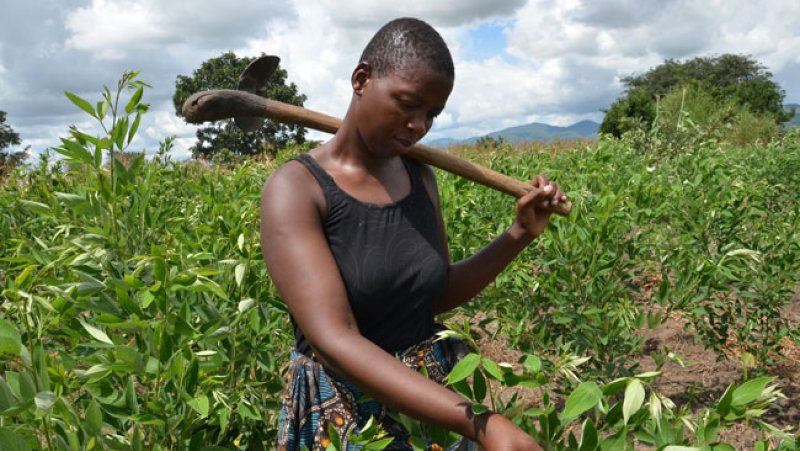
Malawi moves towards commercialization of GM cotton, cowpeas and bananas

Bakhita a

[Editor’s note: Katherine Chaweza is a 2016 Alliance for Science Global Leadership Fellow and the communication and outreach coordinator for the Programme for Biosafety Systems in Malawi.]

Bolstered by a solid and functional biosafety framework, Malawi is one of the few countries in Africa poised to move forward in commercializing genetically modified crops, with cotton, cowpea and banana now in field trials.

The Bt cotton trials have made significant progress. After three years of successful CFTs … an application for environmental release was made … and approval was granted in April 2016. … After three years of the trials, Bt cotton will be commercialized.

Farmers are already asking for the seed, but are being made to understand that there has to be a process for the seed to be released to them. However, their hopes are high after being told that if all goes according to plan, the seed will be released in the next three years.

The progress made with these three trials positions Malawi as one of the few countries in Africa moving towards the commercialization of GM crops, and it’s all thanks to the political will of the Government of Malawi and the county’s workable biosafety framework.

The GLP aggregated and excerpted this blog/article to reflect the diversity of news, opinion, and analysis. Read full, original post: Malawi progresses in GM crop trials

For more background on the Genetic Literacy Project, read GLP on Wikipedia

{{ reviewsTotal }}{{ options.labels.singularReviewCountLabel }}
{{ reviewsTotal }}{{ options.labels.pluralReviewCountLabel }}
{{ options.labels.newReviewButton }}
{{ userData.canReview.message }}

Related Articles

Infographic: Global regulatory and health research agencies on whether glyphosate causes cancer

Infographic: Global regulatory and health research agencies on whether glyphosate causes cancer

Does glyphosate—the world's most heavily-used herbicide—pose serious harm to humans? Is it carcinogenic? Those issues are of both legal and ...

Most Popular

Credit: ACSH
Viewpoint: Who and what’s to blame for the surge in vaccine-preventable diseases?
ChatGPT-Image-May-28-2026-12_56_54-PM
Viewpoint: Vaccines' non-specific effects? The ‘shoddy’ Danish couple whose 'research’ inspires RFK, Jr.’s health delusion
Organic-Produce
Viewpoint: Why you should ignore organic food advocates’ advice to avoid ‘pesticide soaked’ conventional fruits and vegetables
Screenshot-2026-06-05-at-2.12.30-PM
Some plants can poison you. So how did humans figure out what is safe to eat?
Screenshot-2026-06-08-at-11.05.51-AM
Can vaping lead to cancer? New ‘association study’ raises questions of “links"
ChatGPT Image Jun 3, 2026, 03_14_43 PM
Viewpoint: How Earthjustice became the poster child for the abuse of special interest activist funding
ChatGPT-Image-Jun-5-2026-01_17_48-PM
GLP-1 weight-loss drugs may reshape our desires and emotions
Screenshot-2026-06-05-at-3.30.20-PM
Republican lawmakers spread misinformation claiming solar farms permanently destroy potato farms
edb7f6d7-2370-418f-9578-74e29678e35c
Facts & Fallacies Podcast: Nicotine vaping—public health miracle, or risk to children? Professor Cliff Douglas
Screenshot-2026-06-08-at-10.19.30-AM
‘Natural’ wellness supplements linked to liver injury
ChatGPT-Image-Mar-10-2026-01_39_01-PM
Viewpoint—“Miracle molecule” debunked: Why acemannan supplements don’t work
ChatGPT-Image-May-26-2026-07_51_21-AM-2
Viewpoint: There are more than 1,000 chemicals in a cup of coffee—including many substances that can cause cancer. Why isn’t it banned?
glp menu logo outlined

Get news on human & agricultural genetics and biotechnology delivered to your inbox.