Future of milk? Genetically engineered yeast could replace cows

Screen Shot at AM

The latest new buzzword in food tech? Fermentation. And weโ€™re not talking about the kimchi or kombucha kind.

Rather, itโ€™s a process increasingly used by food companies to answer a ballooning demand for natural ingredients that are hard to come by. Instead of sourcing these ingredients from nature, food scientists are creating them through an industrial method that they describe as similar to brewing beer.

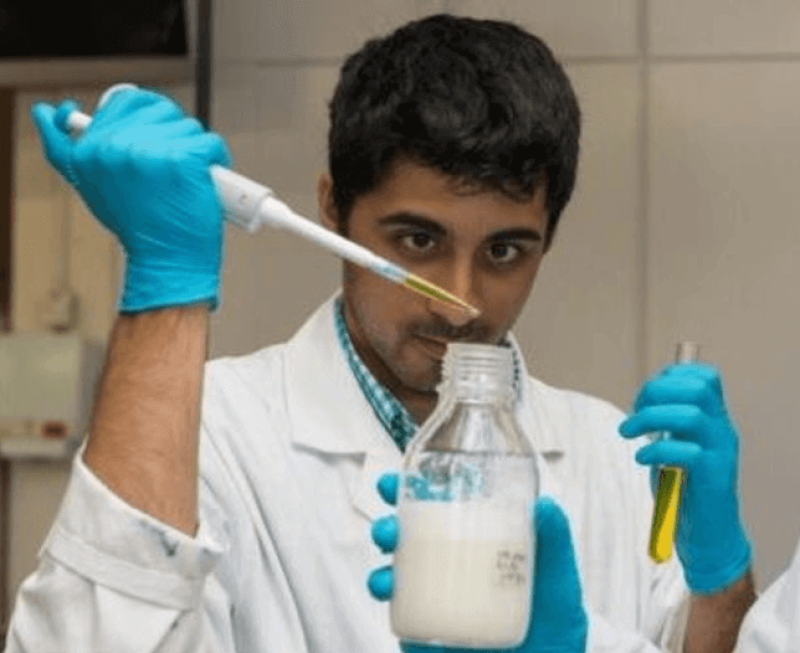
Hereโ€™s how it works: Scientists identify the desired genes in a plant or animal and insert them into a host such as yeast. The yeast is fed sugars and nutrients to stimulate fermentation. Then the yeast and its genes are filtered off, and the desired ingredient is purified out of the remaining broth.

Over at startup Perfect Day, the company is using fermentation to make cow’s milk without cows. They 3D-print the DNA sequence of a cow and insert it into a specific location of yeastโ€”which they have aptly named Buttercupโ€”obtained from the U.S. Department of Agriculture. The yeast ferments sugar to make real milk proteins (casein and whey), which are then combined with plant-based fats and nutrients to get milk that is lactose-free.

The GLP aggregated and excerpted this blog/article to reflect the diversity of news, opinion, and analysis. Read full, original post:ย The Future of Food Production Will Look A Lot Like Brewing Beer

For more background on the Genetic Literacy Project, read GLP on Wikipedia

{{ reviewsTotal }}{{ options.labels.singularReviewCountLabel }}
{{ reviewsTotal }}{{ options.labels.pluralReviewCountLabel }}
{{ options.labels.newReviewButton }}
{{ userData.canReview.message }}

Related Articles

Infographic: Global regulatory and health research agencies on whether glyphosate causes cancer

Infographic: Global regulatory and health research agencies on whether glyphosate causes cancer

Does glyphosateโ€”the world's most heavily-used herbicideโ€”pose serious harm to humans? Is it carcinogenic? Those issues are of both legal and ...

Most Popular

Screenshot 2025-08-25 203032
Mazzengaโ€™s 20-year old muscles: How a still-going-strong 92-year old sprinter wins every race she enters
Screenshot-2026-06-08-at-10.19.30-AM
โ€˜Naturalโ€™ wellness supplements linked to liver injury
global warming
โ€˜Implausibleโ€™: Top climate scientists reject worst-case scenarioโ€”soaring temperatures and fast-rising sea levels
Screen Shot at AM
Facts & Fallacies Podcast: Right-wing politics bad for your health? Separating speculation from science
Screenshot-2026-06-05-at-2.12.30-PM
Some plants can poison you. So how did humans figure out what is safe to eat?
Screenshot-2026-06-05-at-1.44.09-PM
Viewpoint: Scientists have scrapped the worst-case climate scenario. Is that proof that climate change is a hoax, as Trump claims?
Credit: ACSH
Viewpoint: Who and whatโ€™s to blame for the surge in vaccine-preventable diseases?
ChatGPT-Image-May-28-2026-12_56_54-PM
Viewpoint: Vaccines' non-specific effects? The โ€˜shoddyโ€™ Danish couple whose 'researchโ€™ inspires RFK, Jr.โ€™s health delusion
Screenshot-2026-06-08-at-1.35.30-PM
Viewpoint: Social media and fake natural health propaganda fuel surge in use of mostly useless supplements
ChatGPT-Image-Jun-9-2026-03_24_05-PM
Misinformed parents overdosing children with Vitamin A to fight measles
ChatGPT-Image-Mar-10-2026-01_39_01-PM
Viewpointโ€”โ€œMiracle moleculeโ€ debunked: Why acemannan supplements donโ€™t work
Screenshot 2025-07-30 at 10.48
Can gene editing eliminate Down syndrome? Scientists have done it in lab-grown cells
ChatGPT-Image-Jun-9-2026-11_54_59-AM
Why weight-loss drugs might be reducing cancer rates and making treatment more effective
glp menu logo outlined

Get news on human & agricultural genetics and biotechnology delivered to your inbox.