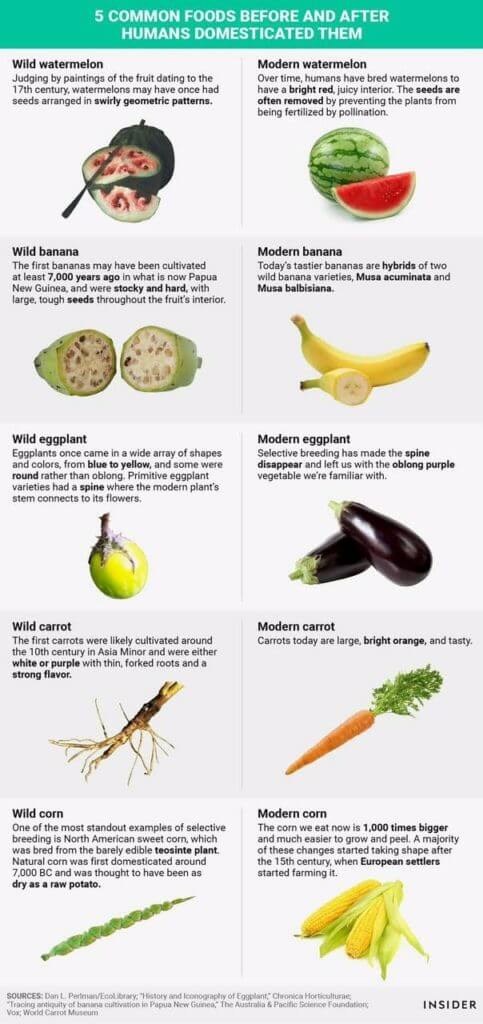
Infographic: 5 popular foods genetically modified by humans–before GMOs

Screen Shot at PM e
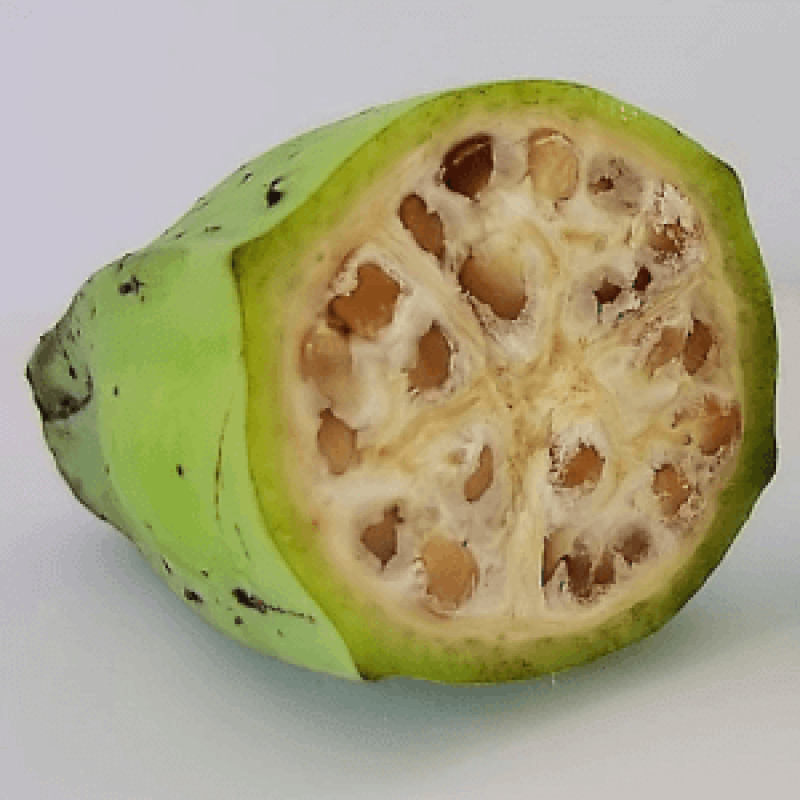
A wild relative of the banana. Photo by Warut Roonguthai

Have you ever wondered what it would be like to eat a completely “natural” diet? Well, for starters, you wouldn’t be able to eat any of the crops developed through conventional breeding methods. That means virtuallyย every fruit and vegetable in your local supermarket, because they have been genetically modified over centuries and millennia by humans selectively breeding for traits such as taste, yield, resistance to pests, durability, duration of life cycle, and more. Over time, and lots of trial and error, this meticulous process has transformed wild plants into the foodsย we nowย know as “watermelon,” “bananas,” “corn,” and so on. But what did these common fruits and vegetables look like in their wild, “natural” state? Check out the helpful infographic below, which is basedย on a 2014 Genetic Literacy Project graphic. [Modern genetic engineering can do this work much more quickly, and more precisely.
The GLP aggregated and excerpted this blog/article to reflect the diversity of news, opinion, and analysis. Read full, original post:ย What 5 popular fruits and veggies looked like before โ€” and after โ€” we domesticated them

{{ reviewsTotal }}{{ options.labels.singularReviewCountLabel }}
{{ reviewsTotal }}{{ options.labels.pluralReviewCountLabel }}
{{ options.labels.newReviewButton }}
{{ userData.canReview.message }}

Related Articles

Infographic: Global regulatory and health research agencies on whether glyphosate causes cancer

Infographic: Global regulatory and health research agencies on whether glyphosate causes cancer

Does glyphosateโ€”the world's most heavily-used herbicideโ€”pose serious harm to humans? Is it carcinogenic? Those issues are of both legal and ...

Most Popular

ChatGPT Image May 10, 2026, 08_16_59 PM 2
Overmedicalization? RFK Jr.โ€™s antidepressant crackdown raises conflict questions over his fee stake in Wisner Baum, the tort firm built on suing drug makers
Picture1-5
Science Disinformation Gap: The transatlantic battle over social media and censorship
Picture1-1
Cooling the planet with balloons: Could a geoengineering gamble slow global warming?
ChatGPT-Image-Apr-13-2026-02_20_22-PM
Viewpoint: Misinformation infodemic? Why assessing evidence is so challengingย 
Screenshot-2026-05-11-104424
Hantavirus outbreak research: Trump administration shut down study last year on rodent-to-human transmission
Picture1-14
When superbugs threaten vulnerable children: Can AI help solve antibiotic resistance?
S
As vaccine rejectionism spreads, measles may be taking a more dangerous turn
Screenshot-2026-05-08-at-3.40.33-PM
Seeds of power: China turns to genetic engineering to become global superpower
Screenshot-2026-05-01-at-1.29.41-PM
Viewpoint: What happens when whole grains meet modern food manufacturing? Labels donโ€™t tell the whole story.
Screenshot 2026-05-11 at 11.30
Despite politicized disinformation, Midwest AI data centers are fueling a solar energy boom
Screenshot-2026-05-08-at-11.55.47-AM
Anti-vax activists falsely blame COVID vaccines for the rising U.S. cancer rate among younger people.
Screenshot 2026-05-08 at 3.01
Transforming farming and nutrition with AI and robotics? Larry Ellisonโ€™s half-billion-dollar Hawaii greenhouse dream goes bust
glp menu logo outlined

Get news on human & agricultural genetics and biotechnology delivered to your inbox.