Cheaper blue jeans that are better for the environment? Genetic engineering can make it happen

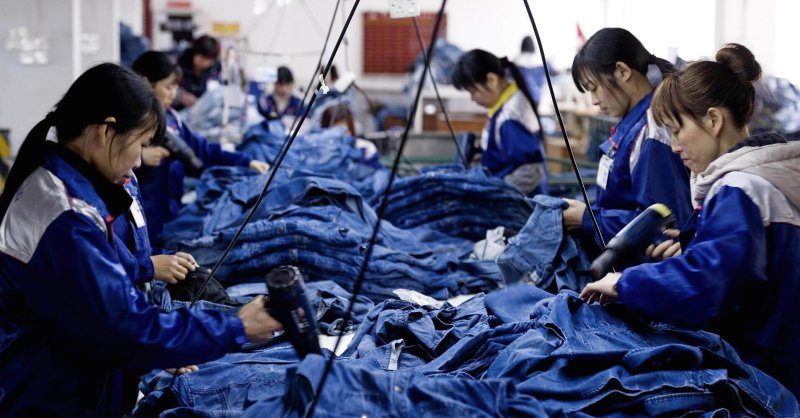
China jean manufacturing x

Editor’s note: This piece is written by Dr. Miller, a physician and molecular biologist, who was the founding director of the FDA’s Office of Biotechnology.

Genetic engineers have developed a way to produce the two principal components [of blue jeans], cotton fabric and indigo dye, for less money and soon will make commercial blue jean production cheaper than ever.

Bt cotton helps farmers to control major pests—the cotton and pink bollworm and the tobacco budworm—which account for a quarter of all crop destruction due to insects. From 1996 through 2014, this technology increased cotton yields by an average of 17.3%…

Bt cotton is also environmentally friendly. With conventional cotton, farmers control insects by applying huge amounts of chemical pesticides known to harm birds, fish and other aquatic organisms. Lessening the need for pesticides also reduces farm workers’ exposure to those chemicals.

The other main ingredient in bluejeans, indigo dye, is usually produced synthetically through a complex, multistep process performed with highly toxic chemicals. It requires special facilities and precautions to protect workers and the environment. But indigo dye can also be made using genetically engineered bacteria. This process has fewer steps, uses water instead of toxic organic solvents, incorporates corn syrup as the primary starting material, and yields nontoxic waste products. While it is not yet efficient enough for commercial use, stay tuned.

Instead of accepting critics’ unsubstantiated claims, consumers should be demanding [genetic engineering’s] wider application in agriculture and other industries.

The GLP aggregated and excerpted this blog/article to reflect the diversity of news, opinion, and analysis. Read full, original post: You’d Look Good in Designer Genes

{{ reviewsTotal }}{{ options.labels.singularReviewCountLabel }}
{{ reviewsTotal }}{{ options.labels.pluralReviewCountLabel }}
{{ options.labels.newReviewButton }}
{{ userData.canReview.message }}

Related Articles

Infographic: Global regulatory and health research agencies on whether glyphosate causes cancer

Infographic: Global regulatory and health research agencies on whether glyphosate causes cancer

Does glyphosate—the world's most heavily-used herbicide—pose serious harm to humans? Is it carcinogenic? Those issues are of both legal and ...

Most Popular

Screenshot 2025-08-25 203032
Mazzenga’s 20-year old muscles: How a still-going-strong 92-year old sprinter wins every race she enters
Screenshot-2026-06-08-at-10.19.30-AM
‘Natural’ wellness supplements linked to liver injury
Screen Shot at AM
Facts & Fallacies Podcast: Right-wing politics bad for your health? Separating speculation from science
ChatGPT-Image-May-28-2026-12_56_54-PM
Viewpoint: Vaccines' non-specific effects? The ‘shoddy’ Danish couple whose 'research’ inspires RFK, Jr.’s health delusion
Screenshot-2026-06-05-at-2.12.30-PM
Some plants can poison you. So how did humans figure out what is safe to eat?
Screenshot-2026-06-05-at-1.44.09-PM
Viewpoint: Scientists have scrapped the worst-case climate scenario. Is that proof that climate change is a hoax, as Trump claims?
Credit: ACSH
Viewpoint: Who and what’s to blame for the surge in vaccine-preventable diseases?
ChatGPT-Image-Jun-9-2026-03_24_05-PM
Misinformed parents overdosing children with Vitamin A to fight measles
Screenshot 2025-07-30 at 10.48
Can gene editing eliminate Down syndrome? Scientists have done it in lab-grown cells
ChatGPT-Image-Mar-10-2026-01_39_01-PM
Viewpoint—“Miracle molecule” debunked: Why acemannan supplements don’t work
ChatGPT-Image-Jun-9-2026-11_54_59-AM
Why weight-loss drugs might be reducing cancer rates and making treatment more effective
ChatGPT-Image-Jun-9-2026-12_30_14-PM
The ‘low-quality’, retracted studies RFK, Jr. and MAHA rely on for anti-vaccine claims
glp menu logo outlined

Get news on human & agricultural genetics and biotechnology delivered to your inbox.