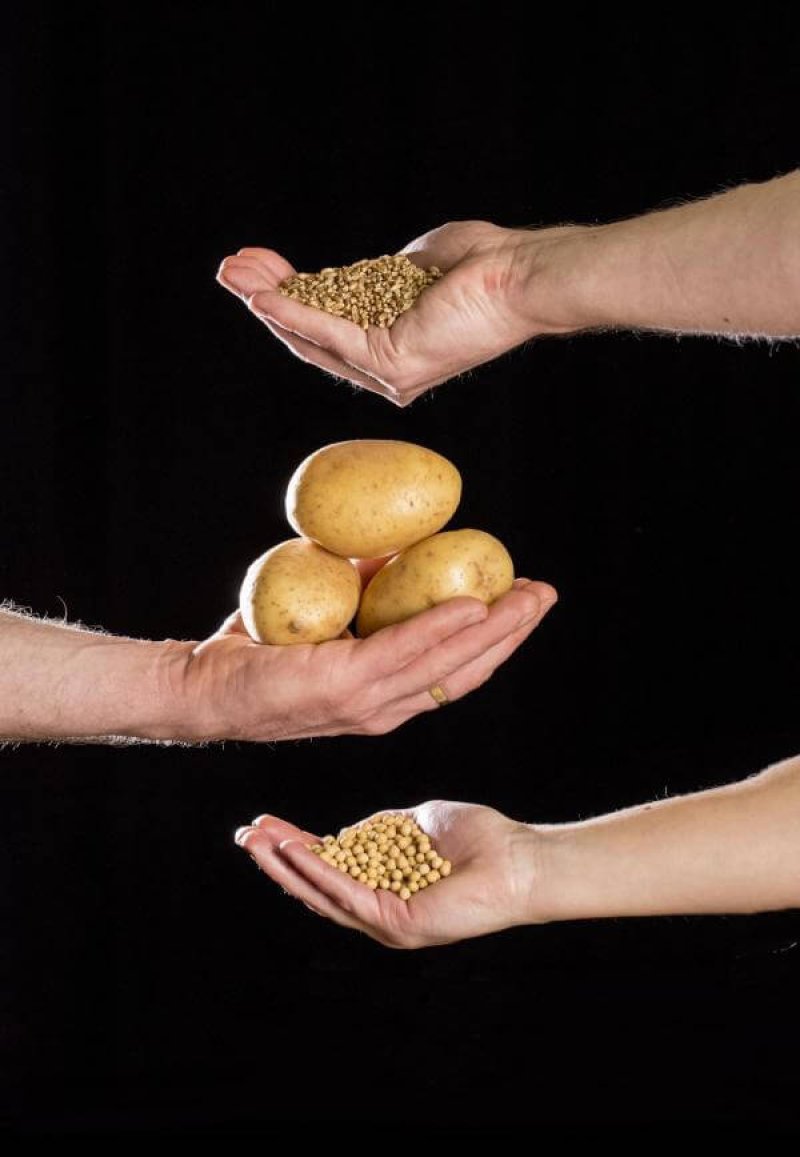
“Denial, surprise, panic, confusion, anger, and concern were among responses from the public…. Once they understood the implications of late blight, they were horrified to learn that they had planted infected transplants in their gardens.”
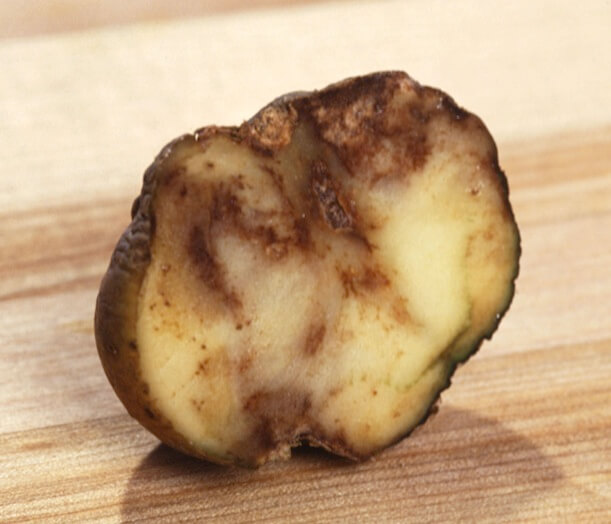
The comment refers to potatoes being thrown away by the millions. But it is not a description of Ireland in the 19th century; it is not a passage from a history textbook; it is a description of the near panic that ensued among farmers along the eastern US in 2009 when a late blight pandemic decimated potato and tomato crops.
It is the same fungus that caused the famine in Ireland, but it’s not back—it never left.
Most are surprised to learn that the causative agent of the infamous potato famine is still around and kicking some 170 years later. But while there are some methods to control and eliminate the fungus—fungicides mainly—it is fairly hardy and has developed resistance to many of these methods. And it is not just in America. Farmers in Southern India have been dealing with heavy outbreaks of the fungus since 2008. In the United Kingdom, one estimate found yield losses and prevention measures of late blight costs farmers about £55 million a year (around $79 million). Worldwide, between tomatoes and potatoes, the disease costs £3.5 billion ($5.1 billion).
But late blight is not the only plant infection that is destroying crops and endangering farms around the world. In the late 1980s, papayas in Hawaii were almost wiped out by the Papaya Ringspot Virus, until scientists stepped in and genetically engineered a disease resistant line. Today, around 90 percent of Hawaiian papayas are disease resistant GMOs.
Treating disease is so vital to the future of agriculture that several scientists set up a non-profit called 2Blades to help advance work on plant pathogens and disease resistance. The group’s goal is to spur promising scientific work on plant disease resistance, move it out of the lab and into the market, so farmers can benefit. To this end, three recent studies supported by 2Blades in the journal Nature Biotechnology described different transgenic crops that had been engineered to resist one of three plant diseases.

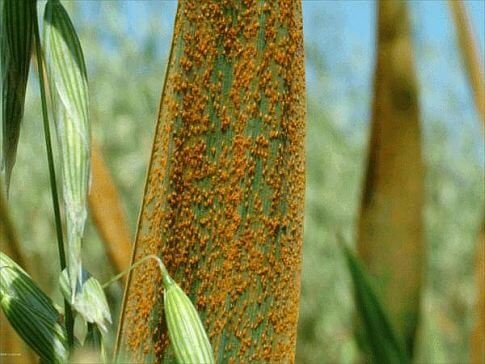
- Asian soybean rust is a fungal infection that affects legumes and soybeans and is causing major yield losses around the world, but in particular in South America. Jack Westwood, external affairs director for the 2Blades Foundation said it costs Brazil $2 billion. Researchers at Brazil’s Universidade Federal de Viçosa found a gene from a pigeonpea that conferred resistance to the fungus and inserted it into the soybean. This represents the first time genes had been isolated for the soybean rust that worked in the soybean plant.
- Late potato blight resistance was addressed by researchers at the UK’s Sainsbury Laboratory. This team found a resistance gene in American black nightshade, a wild relative of the potato, and were able to successfully insert the resistance gene into the crop. While late blight resistant GM potatoes have already been approved in the U.S.—the second generation Innate potato—co-author Jonathan Jones notes the significance of his team’s study is the speed at which they were able to isolate the gene.
- Stem rust is a fungal infection that affects a variety of cereal crops—like wheat and barley—and is currently causing major yield losses in Asia, Africa and the Middle East. Researchers working at the John Innes Centre found two genes that conferred resistance to the infection, in wild relatives, but the paper noted that simple crossing breeding between commercial and wild plants would be inefficient at inserting these genes–in part, because the breeding process can take up to 15 years for the genes to take hold, but also because it would only insert one gene. Inserting one gene leads to the evolution of resistance by the fungus at a much quicker rate. Instead the researchers inserted two for enhanced resistance.
Roger Freedman, Chairman of 2Blades, explained how these genes help confer disease resistance to these important crops:
2Blades has favored a simple strategy for fighting plant disease. Plants are generally able to defend themselves from disease, but successful pathogens overcome the plant defenses by evading recognition. What we have done is to restore the ability of the plant to ‘see’ the pathogen. Once that’s done the plant itself does the rest. That’s the way all three of these resistances work.
The promise of genetically engineered resistance to crop diseases delivers many advantages over the alternatives—e.g. chemical application—for treating these diseases. A crop that has inherent resistance to a deadly fungus does not need to be sprayed with a fungicide (or has to be sprayed less), which means less labor and fewer emissions from running the equipment needed for application. For example Simplot, the makers of the Innate potato estimate farmers will need to annually apply 25-45 percent less fungicide to its GM potatoes. Furthermore, widespread adoption of these potatoes could reduce annual CO2 emissions by 146 million pounds (the equivalent of taking 14,000 cars off the road).
With these diseases decimating farms around the world and climate change accelerating, we need these crops sooner rather than later.
Nicholas Staropoli is the associate director of GLP and director of the Epigenetics Literacy Project. He has an M.A. in biology from DePaul University and a B.S. in biomedical sciences from Marist College. Follow him on twitter @NickfrmBoston.