Mystery of meteors: Building blocks of life remain elusive

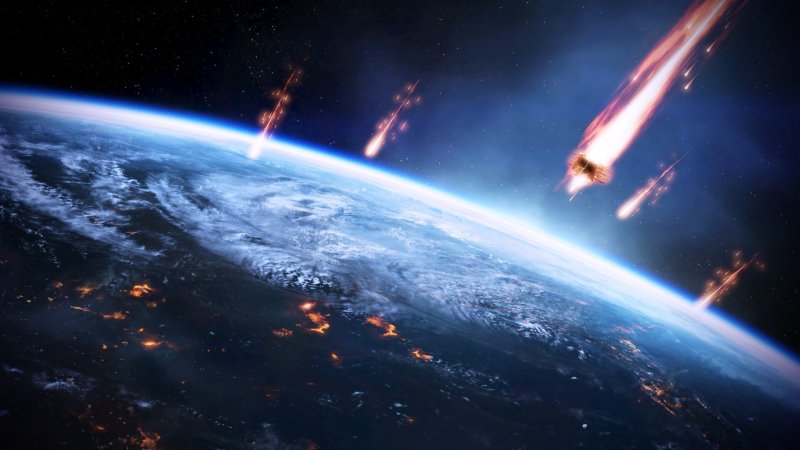
meteors space Earth Mass Effect
wallup.net

Three of the five nucleobases — molecular subcomponents of information-bearing nucleotides which make up our genetic code — likely came from space. But the origins of two key components of RNA and DNA remain a mystery, say two McMaster University astrobiologists.

In a paper just published in the journal Astrobiology, co-authors Ben K.D. Pearce and Ralph Pudritz report that they are able to account for the meteoritic origins of the genetic nucleobases adenine, guanine, and uracil. But after painstaking models to simulate the creation of the five nucleobase building blocks of RNA and DNA — the molecular data-storing templates for life as we know it — they remain puzzled over the origins of cytosine and thymine.

“Imagine an asteroid collision occurs, fragmenting the asteroid and sending fragments on trajectories that will intercept early Earth,” said Pearce. “These nucleobases would fall to the surface as meteorites, and thaw.”

If a meteorite fell into, say, a pond, he explains, the nucleobases could seep from the pores of the meteorite into the pond water, and possibly react with other chemicals to form nucleotides, and then RNA.

However, no nucleobases have yet been detected on the surfaces of ices in space, the authors note.

The GLP aggregated and excerpted this blog/article to reflect the diversity of news, opinion, and analysis. Read full, original post: Astrobiologists Still Puzzled Over Origins Of Our Genetic Code


{{ reviewsTotal }}{{ options.labels.singularReviewCountLabel }}
{{ reviewsTotal }}{{ options.labels.pluralReviewCountLabel }}
{{ options.labels.newReviewButton }}
{{ userData.canReview.message }}

Related Articles

Infographic: Global regulatory and health research agencies on whether glyphosate causes cancer

Infographic: Global regulatory and health research agencies on whether glyphosate causes cancer

Does glyphosate—the world's most heavily-used herbicide—pose serious harm to humans? Is it carcinogenic? Those issues are of both legal and ...

Most Popular

Screenshot-2026-04-20-at-2.26.27-PM
Viewpoint — Food-fear world: The latest activist scientists campaign: Cancer-causing additives
Screenshot-2026-03-13-at-12.14.04-PM
The FDA wants to make many popular prescription drugs OTC—a great idea. Here’s why it’s unlikely to happen
Screenshot-2026-05-01-at-11.56.24-AM
‘Science moves forward when people are willing to think differently’: Memories of DNA maverick Craig Venter
ChatGPT-Image-May-1-2026-02_20_13-PM
How RFK, Jr.’s false vaccine claims are holding up $600 million to fight diseases in poor countries
Screenshot-2026-04-03-at-11.15.51-AM
Paraben panic: How a flawed study, media hype, and chemophobia convinced the public of the danger of one of the safest classes of preservatives
viva-la-vida-watermelons
Misinformation and climate change are endangering summer watermelons
Screenshot-2026-04-30-at-2.19.37-PM
5 myths about summer dehydration that could damage your health — or even kill you
ChatGPT-Image-Mar-27-2026-11_27_05-AM
The myths of “process”: What science says about the “dangers’ of synthetic products and ultra-processed foods
ChatGPT-Image-Mar-10-2026-01_39_01-PM
Viewpoint—“Miracle molecule” debunked: Why acemannan supplements don’t work
Drinking lots of water can help reduce the effects of aging
Nanoplastics in drinking water: MAHA activists forge science-based bipartisan coalition 
Screenshot-2026-05-04-at-12.54.32-PM
How Utah became the country’s supplement capital  — and a haven for unregulated, ineffective and fake products
79d03212-2508-45d0-b427-8e9743ff6432
Viewpoint: The Casey Means hustle—Wellness woo opportunism dressed up as medical wisdom
circular-bioeconomy-should-focus-on-sustainable-wellbeing
GLP podcast: What's wrong with 'doomsday' environmentalism? It's false.
glp menu logo outlined

Get news on human & agricultural genetics and biotechnology delivered to your inbox.