Bacteria could transform trees into industrial chemical scrubbers

tree roots

Hacking trees by adding bacteria to their roots could help scrub contaminated soil clean of chemicals and metals from industrial spillages and fallouts, a process known as gentle remediation.

. . . .

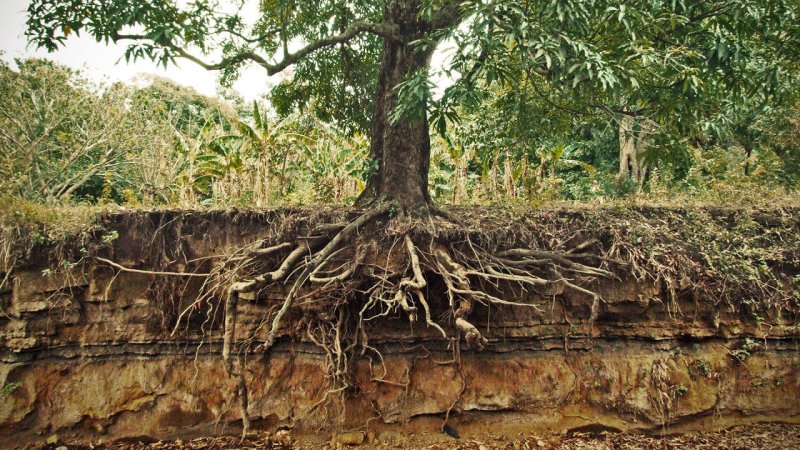
Trees such as willow and poplar are especially useful: their roots can sink deep down to reach groundwater and suck up pollutants. But the trees do not act alone; pollutant-eating bugs are crucial partners. In many cases, these microbes can be added to the tree roots to help them suck up or break down the pollutant.

. . . .

Strains of bacteria are taken from polluted soils, since this is where pollutant-eating bugs are naturally found. It’s often a case of scientists picking the best strains and letting them share genetic material with bacteria naturally living with the trees, a process known as conjugation. There is no need for genetic modification of the bacteria.

. . . .

‘You try to improve the potential of the microbes already there,’ he said. ‘If those there cannot degrade the pollutant, we can conjugate them with strains that have pathways to break it down. We modified bacteria inside the plants too, to allow them to degrade the compounds that are taken up by the plant….’

The GLP aggregated and excerpted this blog/article to reflect the diversity of news, opinion and analysis. Read full, original post: Bacteria turn trees into pollution-eating machines

{{ reviewsTotal }}{{ options.labels.singularReviewCountLabel }}
{{ reviewsTotal }}{{ options.labels.pluralReviewCountLabel }}
{{ options.labels.newReviewButton }}
{{ userData.canReview.message }}

Related Articles

Infographic: Global regulatory and health research agencies on whether glyphosate causes cancer

Infographic: Global regulatory and health research agencies on whether glyphosate causes cancer

Does glyphosate—the world's most heavily-used herbicide—pose serious harm to humans? Is it carcinogenic? Those issues are of both legal and ...

Most Popular

d-b
Blocked arteries, kidney stones, nausea, constipation, fatigue: Long list of health problems caused by too much vitamin D 
Screenshot-PM-24
Viewpoint: The herbicide glyphosate isn’t perfect. Banning it would be far worse.
ChatGPT-Image-Mar-27-2026-11_27_05-AM
The myths of “process”: What science says about the “dangers’ of synthetic products and ultra-processed foods
Screenshot-2026-04-29-at-11.31.42-AM
Dad brains: Only women undergo bodily changes during and after childbirth? Think again.
ChatGPT-Image-Mar-3-2026-01_17_14-PM
MAHA wellness influencers deride proven anxiety medications, tout lifestyle fixes
png-pill-omega-Supp-fish-oil
Fish oil supplements for brain injuries probably don’t work 
circular-bioeconomy-should-focus-on-sustainable-wellbeing
GLP podcast: What's wrong with 'doomsday' environmentalism? It's false.
ChatGPT-Image-Apr-28-2026-12_46_14-PM-2
Kennedy has quietly stopped touting problematic raw milk. Health concerns aren’t why
ChatGPT-Image-Apr-22-2026-11_06_18-AM
Wellness influencer nonsense: No, nicotine does not boost cognition and productivity, but it can damage your health 
ChatGPT-Image-Apr-29-2026-11_04_44-AM-2
Anti-vaccine activists are now the majority in RFK, Jr.’s CDC Vaccine Panel
ChatGPT-Image-Feb-16-2026-01_04_32-PM
Raw milk myth wake-up call
glp menu logo outlined

Get news on human & agricultural genetics and biotechnology delivered to your inbox.