Kevin Folta: If GMO crops don’t meet expectations, why do so many farmers grow them?

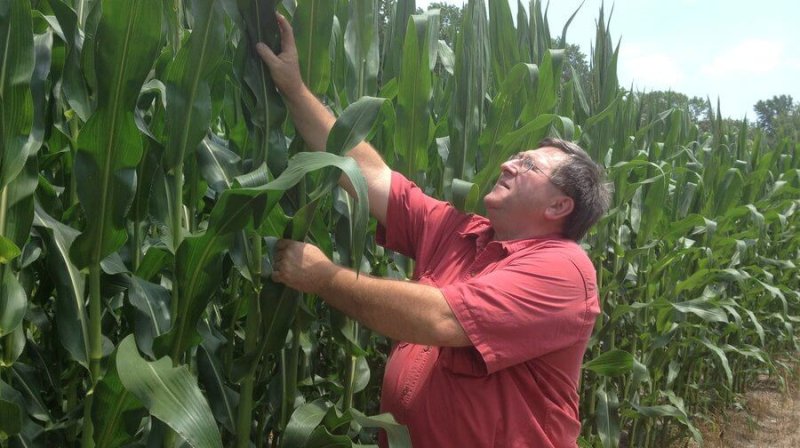
farmer richard wilkins wide c ff a c d cba e fd bf f f s c

Kevin Folta is a professor in and chairman of the Horticultural Sciences Department at the University of Florida, Gainesville. He got his Ph.D. in Molecular Biology from University of Illinois at Chicago in 1998, and he previously worked at University of Wisconsin.

The New York Times failed again, publishing a less-than-scientific ball of bias that states genetically engineered crops fail to produce as expected. It is a great way to get clicks.  But reporter Danny Hakim’s analysis contrasts with that of the folks that really understand the benefits and limitations of the technologies– farmers that use it.

. . . .

We could spend a lot of time reviewing the data he used to reach those conclusions.  Instead, to discuss this intelligently you only need to know a couple of points:

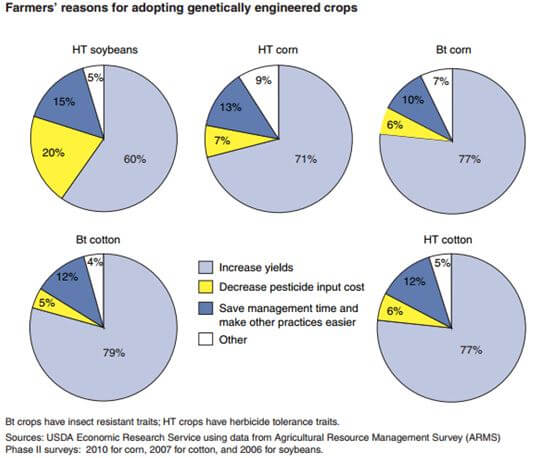
No genes for yield were ever installed.  The current suite of biotech traits were not meant to improve yields, they were made to ensure yields.  In other words, they help ag producers farm with lower costs, fewer insecticides, improved weed control and virus resistance in some cases.  Same yield at lower cost = better for farmers.

. . . .

Farmers are shrewd business men and women.  There is a certain arrogance in proclaiming a technology is a failure, when millions of people use it because it works…
usda-data

The GLP aggregated and excerpted this blog/article to reflect the diversity of news, opinion and analysis. Read full, original post: Rehashing a Tired Argument

The pie charts are from a separate post on Folta’s blog titled: Some Actual Yield Data

 

{{ reviewsTotal }}{{ options.labels.singularReviewCountLabel }}
{{ reviewsTotal }}{{ options.labels.pluralReviewCountLabel }}
{{ options.labels.newReviewButton }}
{{ userData.canReview.message }}

Related Articles

Infographic: Global regulatory and health research agencies on whether glyphosate causes cancer

Infographic: Global regulatory and health research agencies on whether glyphosate causes cancer

Does glyphosate—the world's most heavily-used herbicide—pose serious harm to humans? Is it carcinogenic? Those issues are of both legal and ...

Most Popular

ChatGPT-Image-Jun-11-2026-01_15_03-PM
Selective Pressure, Selective Silence
ChatGPT Image Jun 3, 2026, 03_54_37 PM
Viewpoint: “Turn on, tune in, drop out”—Kennedy embraces the Timothy Leary psychedelic revolution
Screenshot 2026-05-26 at 10.15
Viewpoint: Double standard—Why does the wellness industry get a free pass while Big Healthcare is treated as morally suspect?
Screenshot-2026-06-05-at-1.44.09-PM
Viewpoint: Scientists have scrapped the worst-case climate scenario. Is that proof that climate change is a hoax, as Trump claims?
Screenshot-2026-06-11-at-3.40.06-PM
'Toxin' detox: A gastroenterologist weighs in on $71 billion health trend
Screenshot-2026-06-11-at-4.00.17-PM
Gen Z burned by sunscreen misinformation and tanning myths
Screenshot-2026-06-05-at-2.12.30-PM
Some plants can poison you. So how did humans figure out what is safe to eat?
ChatGPT-Image-Jun-11-2026-10_34_44-AM-2
Will hi-tech genetic fortune-telling really help parents make healthier children?
Screenshot-2026-06-03-at-3.33.44-PM
Viewpoint: Vaccine deniers are attacking a life-saving Vitamin K shot for newborns that isn’t even a vaccine
Screenshot-2026-06-08-at-1.35.30-PM
Viewpoint: Social media and fake natural health propaganda fuel surge in use of mostly useless supplements
Credit: ACSH
Viewpoint: Who and what’s to blame for the surge in vaccine-preventable diseases?
ChatGPT Image Jun 3, 2026, 03_14_43 PM
Viewpoint: How Earthjustice became the poster child for the abuse of special interest activist funding
ChatGPT-Image-Jun-10-2026-12_57_24-PM
Viewpoint: Why gene-editing babies is moral and certain to happen
glp menu logo outlined

Get news on human & agricultural genetics and biotechnology delivered to your inbox.