Insecticides and fungicides—not neonicotinoids—contribute most to bee mortality, study says

beeinsectide

The impact of pesticides on pollinators remains an ongoing concern, especially as new research highlights the complex web of pesticide residues entering the internal hive environment and colony food stream1,2. Honey bees (Apis mellifera) provide critical pollination services valued at over $200 billion worldwide3 and $17 billion in the US.

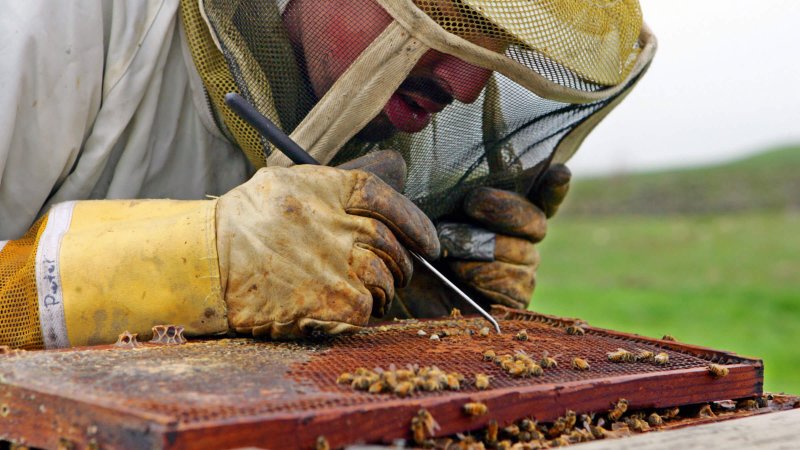
Commercial beekeepers have increasingly struggled with high rates of colony morbidity and mortality, in part because of increased pressure of the parasitic varroa mite (Varroa destructor), pathogens (primarily viruses and bacterial infections), pesticide contamination of hive matrices, poor nutrition, and frequent queen losses.

In this study, we … measur[ed] the pesticide exposure within the internal hive environment during the entire beekeeping season, and relating these measures to colony health outcomes.

… We found clear links between an increase in the total number of products in wax and colony mortality. In particular, we found that fungicides with particular modes of action increased disproportionally in wax within colonies that died…

. . . .

Low amounts of neonicotinoid insecticides… were found in six wax samples; two were contaminated with imidacloprid… The majority of [bee health problems] came from the presence of varroacides (71.1%), followed by insecticides (28.3%) and fungicides (0.5%), while herbicides contributed minimally (<0.01%).

The GLP aggregated and excerpted this blog/article to reflect the diversity of news, opinion and analysis. Read full, original post: In-hive Pesticide Exposome: Assessing risks to migratory honey bees from in-hive pesticide contamination in the Eastern United States


{{ reviewsTotal }}{{ options.labels.singularReviewCountLabel }}
{{ reviewsTotal }}{{ options.labels.pluralReviewCountLabel }}
{{ options.labels.newReviewButton }}
{{ userData.canReview.message }}

Related Articles

Infographic: Global regulatory and health research agencies on whether glyphosate causes cancer

Infographic: Global regulatory and health research agencies on whether glyphosate causes cancer

Does glyphosate—the world's most heavily-used herbicide—pose serious harm to humans? Is it carcinogenic? Those issues are of both legal and ...

Most Popular

ChatGPT-Image-Mar-27-2026-11_47_30-AM-2
FDA’s expedited drug reviews are hailed in some quarters but other approval practices are problematic
Farmers can talk to plants
Farmers are a major source of misinformation—about farming
Screenshot-2026-05-01-at-1.29.41-PM
Viewpoint: What happens when whole grains meet modern food manufacturing? Labels don’t tell the whole story.
ChatGPT-Image-Apr-13-2026-02_20_22-PM
Viewpoint: Misinformation infodemic? Why assessing evidence is so challenging 
S
As vaccine rejectionism spreads, measles may be taking a more dangerous turn
Screenshot 2026-05-06 at 2.19
Vaccine shootout at the CDC 
What explains Homo sapiens’ huge brains? Ancient climate change played a role
Viewpoint: Internal White House documents detail administration’s strategy to undermine climate science
Screenshot-2026-04-20-at-2.26.27-PM
Viewpoint — Food-fear world: The latest activist scientists campaign: Cancer-causing additives
ChatGPT-Image-May-7-2026-11_28_04-AM-2
‘Conflict entrepreneurs’ are driving disinformation and shaping public opinion
bigstock opioids on chalkboard with rol
GLP podcast: 'Safe injection sites': enabling drug addiction or saving lives?
ChatGPT-Image-May-6-2026-03_41_05-PM
‘Protecting the integrity of science’: Kennedy’s FDA blocks release of taxpayer-funded studies finding COVID and shingles vaccines safe
Screenshot-2026-05-06-at-2.07.43-PM
Manufacturing a conspiracy: The timeline of how  the White House embraced the fringe claim that scientists are being mysteriously murdered
circular-bioeconomy-should-focus-on-sustainable-wellbeing
GLP podcast: What's wrong with 'doomsday' environmentalism? It's false.
Screenshot 2026-05-06 at 12.49
Immortal dragons: The quest to ‘make death optional’

Sorry. No data so far.

glp menu logo outlined

Get news on human & agricultural genetics and biotechnology delivered to your inbox.