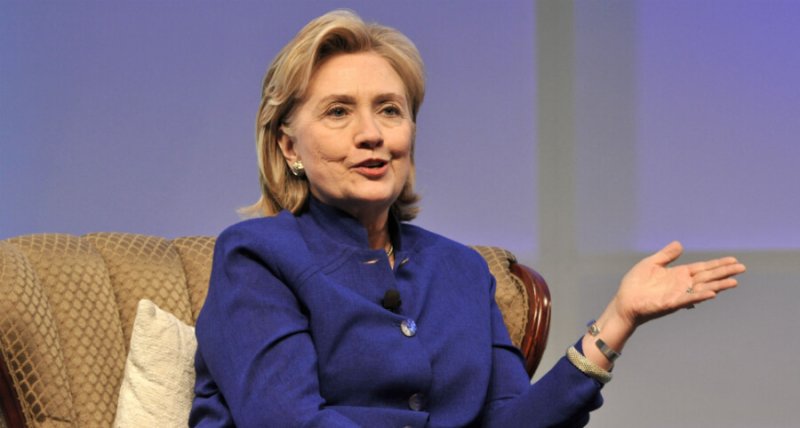
Hillary Clinton has officially accepted the nomination to be the democrat’s nominee for president, becoming the first women to head up the presidential ticket of a major US political party.
In 2014, during a a 65-minute question and answer appearance at the Biotechnology Industry Organization (BIO) convention in San Diego, she expressed her support for genetically modified crops and crop biotechnology. Clinton conversed with Jim Greenwood, BIO president, on a wide range of topics including GMOs.
“I stand in favor of using seeds and products that have a proven track record,” Clinton said, adding that biotech professionals need to continue to try to make the case for GMO-skeptics. “There is a big gap between what the facts are, and what the perceptions are.”
Clinton noted that there are unwarranted fears surrounding GMOs because many people do not understand science or biotechnology and are easily swayed by code words and misguided perceptions. “Genetically modified sounds ‘Frankensteinish’ – drought resistant sounds really like something you want,” she said.
Clinton’s full talk is available in the video embedded below. Her comments on biotechnology begin at approximately 29 minutes in.
Clinton noted her own experiences of promoting drought-resistant seeds in Africa and meeting resistance to her efforts.

We talk about drought-resistant seeds, and I’ve promoted them all over Africa. By definition, they have been engineered to be drought-resistant, I mean that’s the beauty of them. Maybe somebody can get their harvest done and not starve, and maybe there’s some left over to sell. And yet I’ve been involved in a lot of the political debates in other countries about whether or not to accept certain kinds of seeds.
Clinton emphasized the need for a comprehensive educational effort to help farmers, governments and the public accept genetically modified crops.
We created a program called Feed the Future, which is trying to help the farmers be educated enough to know that drought-resistant seeds, for example, are not going to hurt them….and this is painstaking work, doesn’t get solved overnight. You have to be working at the top with the departments of agriculture, with finance ministries, with prime ministers and presidents’ offices, and you have to be working from the bottom up. I don’t see the short cut for it.
Clinton called for a new vocabulary in conversations about biotechnology that focuses on the benefits of improved crops.
“‘Genetically modified’ sounds Frankensteinish. ‘Drought resistance’ sounds really – something you want. So how do you create a different vocabulary to talk about what it is you’re trying to help people do,” Clinton said, encouraging biotechnology companies to be more thoughtful about the way their research is being communicated.
Clinton also said that she did not want to see the U.S. lose biotechnology companies as they move out of the country to elsewhere that might have a friendlier tax and regulatory system for biotechnology.
I don’t want to see biotech companies or pharma companies moving out of our country simply because of some perceived tax disadvantage and potential tax advantage somewhere else.