Over the next decade, is it possible to chemically synthesize the entire human genome and insert it into a cell?
This was one of the projects discussed at a meeting of scientists, ethicists, lawyers and entrepreneurs at Harvard University that came under criticism last week for discussing ethically sensitive issues behind closed doors.
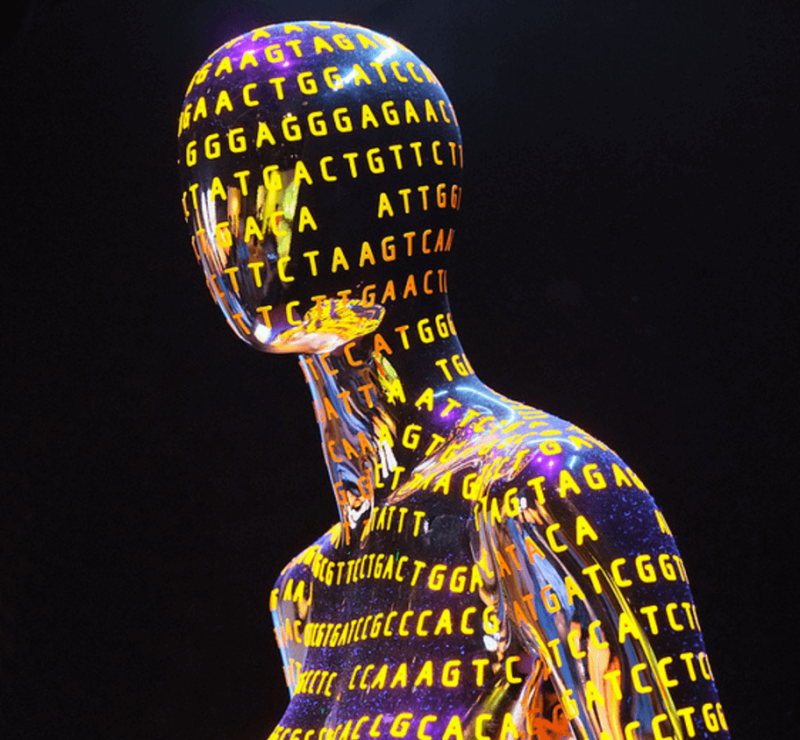
DNA synthesis technologies currently allow researchers to make long strands of DNA by chemically stringing together A, T, G and C — the letters of the genetic code in any order they choose. However, these have not reached the extent of being able to make extremely and complex stretches of DNA such as chromosomes found in human cells. The Harvard meeting, pegged as an exploratory stage to share information on this topic, stirred quite a bit of debate in the news and outrage from scientists and ethicists.
But is this even a controversy? Or just a disagreement and a misunderstanding that happened to make for some headlines?
Here’s how the story unfolded: Drew Endy, a synthetic biologist and professor at Stanford University was one of the researchers invited. However, according to the New York Times, he refused to attend because “it was not being opened to enough people and was not giving enough thought to the ethical implications of the work.” He tweeted out his displeasure:
Endy, along with Laurie Zoloth, a bioethicist at Northwestern University, later laid out their concerns in a commentary titled “Should we synthesize a human genome?” which was uploaded to an MIT data repository DSpace@MIT on May 10 and later published in Cosmos Magazine. (Full Disclosure: Laurie Zoloth serves on the advisory board of the GLP)
While there was some discussion surrounding this issue on social media, the first articles in mainstream media started appearing a few days later. But on the same day, a press release was sent by the Center for Genetics and Society, a non-profit organization that is known to be critical of advances in biotechnology. Marcy Darnovsky, executive director of the organization, was sharply critical of the meeting, saying “A semi-secret meeting of scientists and business people to make plans about synthesizing the human genome is a new low in scientific accountability.”
As Endy and Zoloth wrote in their comment, our ability to make longer and longer strands of DNA starting from just a mixture of chemicals has been steadily improving and we’re simultaneously also making it cheaper to do so. Today the cost to synthesize a human genome is estimated at around $90 million, down from the $12 billion it would have taken only a decade ago. At the current rate, the price could be as low as $100,000 in 20 years.
This raises a whole host of questions and should be discussed openly with the moral considerations taken into account, they note:
Would it be OK, for example, to sequence and then synthesize Einstein’s genome? If so how many Einstein genomes should be made and installed in cells, and who would get to make them? Taking a step back, just because something becomes possible, how should we approach determining if it is ethical to pursue?
Given that human genome synthesis is a technology that could be used to completely redefine the core of what now joins all of humanity together as a species, we argue that discussions of making such capacities real, like today’s Harvard conference, should not take place without open and advance consideration of whether and under what circumstances it is morally right to proceed.
Was this a secret meeting or a failure in communication?
George Church responded to the criticisms in interviews with New York Times and STAT, noting that the meeting was initially planned to be open to the press and public. However, because the group had planned to publish a commentary about the meeting in a major scientific journal, the journal had requested that details of the meeting be kept under embargo. The organizers, caught between two opposing priorities, decided to keep the discussions private.
“I’m not sure that was the best idea,” he conceded to STAT.

In fact, according to his STAT interview in addition to the article, which would be published soon, a video of the entire meeting was going to be made available. Church also acknowledged Drew Endy’s concerns, saying that it was a misunderstanding and that he has reached out to clarify.
Rob Carlson, a biotech investor and consultant, and an invitee who could not attend, noted his frustration about the issue on his blog:
I’ve checked the various associated correspondence, and there’s nothing about keeping it “secret.” In fact, the whole frickin’ point of coupling the meeting to a serious, peer-reviewed paper on the topic was to open up the conversation with the public as broadly as possible.
In addition, Carlson writes that contrary to Endy’s claims, there were reporters present at the gathering and that they had not been mentioned either in the news or on social media due to the embargo. It’s worth noting here that he doesn’t name his source, citing the same embargo restrictions.
Though these statements directly contradict the narrative that the meeting was supposed to be “secret” it’s also unclear why the invite posted by Endy states that “we intentionally did not invite the media because we want everyone to speak freely and candidly without concerns about being misquoted or misinterpreted.”
Why synthesize a human genome?
Sriram Kosuri, a synthetic biology researcher at the University of California Los Angeles in a comment to the Genetic Expert News Service highlighted the technical limitations of such a project, saying
There are many challenges to chemically synthesize a complete human genome from scratch, so it’s interesting as a thought experiment.[…]. The bigger question is what could this technology be used for? My understanding of the meeting was to discuss the scientific and technical challenges to see if such a project was worthwhile and technically feasible. To me not knowing the exact plans of the group, it is unclear what the big payoffs, real dangers or moral quagmires of the project are.[…]. However, my understanding is that there is no real technical ability nor desire to work on making genetically engineered humans, so I’m not sure what all the controversy is about.
Carlson also noted in his blog the technical challenges:
…no one is going to be running off to the lab to crank out synthetic humans. That 6 billion bases, by the way, just for one genome, exceeds the total present global demand for synthetic DNA. This isn’t happening tomorrow. In fact, synthesizing a human genome isn’t going to happen for a long time.
One potential misstep from the organizers was not considering the fact that the meeting was already too big to be closed to the press, according to Hank Greely, director of Stanford’s Center for Law and Biosciences who said in an interview to the Santa Cruz Sentinel, “Closed meetings have a place — in very early, and usually small, discussions of a sensitive topic. At a reported 130 attendees, and after an earlier small meeting, I’m not sure closing this meeting made sense.”
In hindsight, there could have been some better judgements made within the limitations of the embargo structure as pointed out by the organizers of the meeting. The article and the video, whenever it is released will definitely throw more light on the issue. However, the current debate might have just been a storm in a tea cup. That however, does not to diminish the importance of some of the issues raised by Endy and Zoloth. Indeed, if anything, this story has only highlighted the extremely sensitive nature of the debates surrounding biological advances such as gene-editing, human embryo manipulation and synthetic biology and emphasizes the need for clear communication.
Arvind Suresh is a science media liaison at the Genetic Expert News Service. He is also a science communicator and a former laboratory biologist. Follow him @suresh_arvind.