Silkworms may be key to improving blood preservation, medical testing

ed z

The GLP aggregated and excerpted this blog/article to reflect the diversity of news, opinion and analysis.

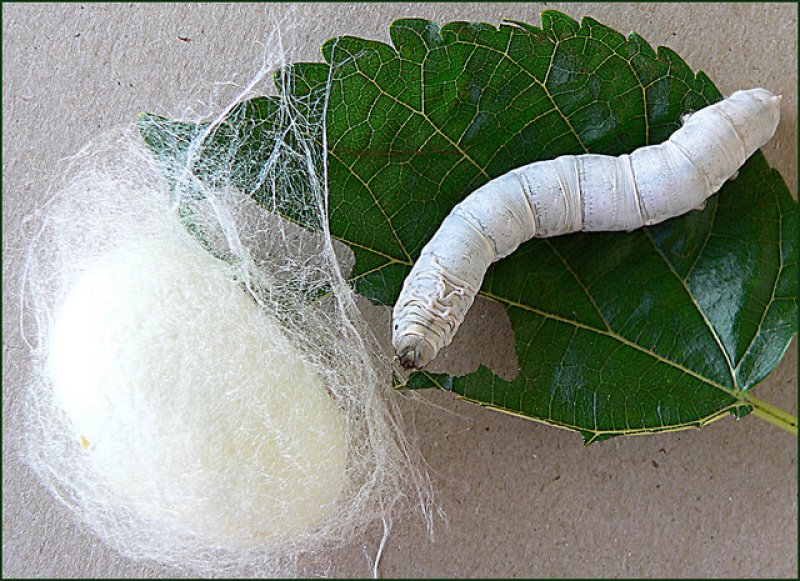
The boxes arrive from Japan, full of what look like packing peanuts. But these white oblong shapes aren’t there just to protect some other cargo. These are silkworm cocoons. Snip them open, throw out the brownish grub inside, boil down the casing, and you are left with a near-magical material.

David Kaplan has used silk to make vaccines and antibody drugs that don’t need to be refrigerated. And now, in a paper published in the Proceedings of the National Academy of Sciences, the Tufts University bioengineer and his colleagues have shown that silk could be used to preserve blood samples at room, or even body temperatures.

“We’re still a ways away from having a viable technology that can be brought to the patient’s doorstep,” said Roger Peck, a diagnostics specialist at the global health nonprofit PATH. But, he noted, the technology could make diagnostic tests more accessible to rural communities — and potentially more accurate.

Jonathan Kluge used to work at Tufts and is now director of R&D at Vaxess Technologies, a company that spun out of Kaplan’s lab. Back when he was still in academia, he and his lab mates created both a silk powder and a silk solution. They mixed these substances with blood, let the mixtures dry, and found that even at high temperatures, the silk-preserved blood still yielded almost all of the proteins more reliably than either frozen blood samples or dried blood spots.

Read full, original post: Silk could transform the blood-testing business

{{ reviewsTotal }}{{ options.labels.singularReviewCountLabel }}
{{ reviewsTotal }}{{ options.labels.pluralReviewCountLabel }}
{{ options.labels.newReviewButton }}
{{ userData.canReview.message }}

Related Articles

Infographic: Global regulatory and health research agencies on whether glyphosate causes cancer

Infographic: Global regulatory and health research agencies on whether glyphosate causes cancer

Does glyphosate—the world's most heavily-used herbicide—pose serious harm to humans? Is it carcinogenic? Those issues are of both legal and ...

Most Popular

Screenshot 2026-05-06 at 2.56
Singularity crisis ahead? Can super babies save us from rogue AI geniuses?
Screenshot-2026-03-13-at-12.14.04-PM
The FDA wants to make many popular prescription drugs OTC—a great idea. Here’s why it’s unlikely to happen
Screenshot-2026-04-20-at-2.26.27-PM
Viewpoint — Food-fear world: The latest activist scientists campaign: Cancer-causing additives
Screenshot-2026-05-01-at-11.56.24-AM
‘Science moves forward when people are willing to think differently’: Memories of DNA maverick Craig Venter
Screenshot-PM-24
Viewpoint: The herbicide glyphosate isn’t perfect. Banning it would be far worse.
images
The never-ending GMO debate: Pros and cons
Screenshot-2026-04-30-at-2.19.37-PM
5 myths about summer dehydration that could damage your health — or even kill you
Screenshot-2026-04-03-at-11.15.51-AM
Paraben panic: How a flawed study, media hype, and chemophobia convinced the public of the danger of one of the safest classes of preservatives
Screenshot-2026-05-01-at-1.29.41-PM
Viewpoint: What happens when whole grains meet modern food manufacturing? Labels don’t tell the whole story.
79d03212-2508-45d0-b427-8e9743ff6432
Viewpoint: The Casey Means hustle—Wellness woo opportunism dressed up as medical wisdom

Screenshot-2026-05-06-at-2.07.43-PM
Manufacturing a conspiracy: The timeline of how  the White House embraced the fringe claim that scientists are being mysteriously murdered
glp menu logo outlined

Get news on human & agricultural genetics and biotechnology delivered to your inbox.