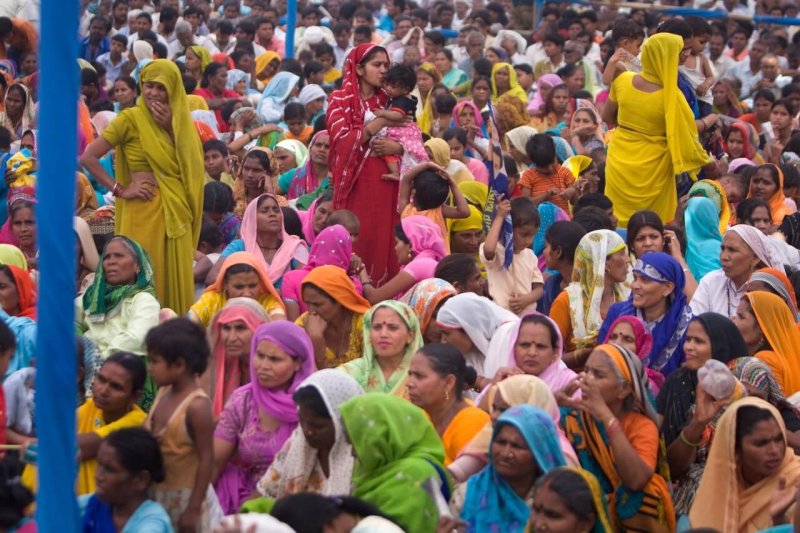
India’s caste system has created a very distinct genetic profile in a rather short time in one of the world’s most diverse populations, modern genetic analysis has found. The country presents an unusual study on how genes can be sequestered by endogamous practices — marrying within a specific ethnic group, class, or social group — with implications for society, politics and maybe even health and disease.
India has a very diverse population. Each of its 1.2 billion people belong to 4,635 definitive populations, ranging in size from a few hundred to several million people. The earliest Indian residents are believed to have migrated from Africa about 75,000 years ago. Other groups of people also arrived on the subcontinent, from Central Asia and East Asia, and intermarried a great deal.
Then, around the year 500 something dramatic happened. The caste system began to show its effects.
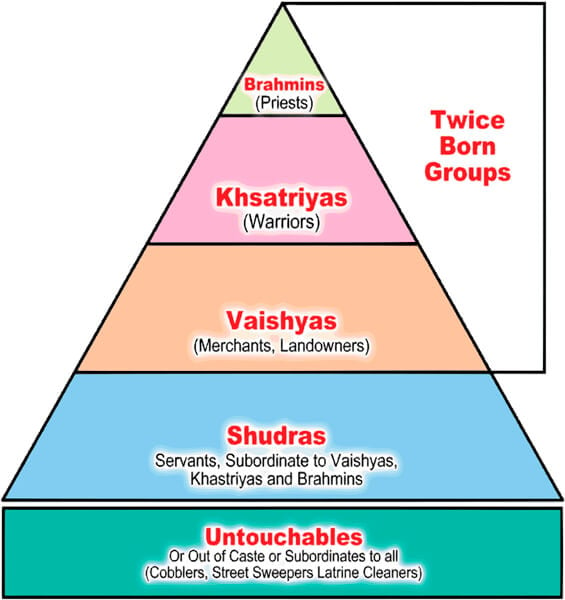
The caste system, which divided up society into four groups (from upper to lower they are Brahmin, Kshatriya, Vaishya and Sudra), as well as “untouchables” outside (and therefore below) any caste, was first described in the Rig Vega, written between 1,700 and 1,000 BC. But the caste system began to be enforced much later during the Gupta empire, which ruled northern India between 320 and 550. The empire, also known as Vedic Brahminism, was noted for flourishing economics, art and literature, as well as for its enforcement of ancient moral laws and conduct that all Hindus must follow. These laws included allowing marriage only within each tier of each person’s caste.
Historians have argued that the caste system started much earlier, and some genetic studies have supported that argument. In addition, earlier studies pointed to the idea that there were, genetically and socially, only two distinct groups in India — those from the north, and those from the south. However, a recent study in the Proceedings of the National Academy of Sciences analyzed genome-wide data from 367 people from 18 mainland and 2 island populations and discovered that India’s population has not two, but four distinct genetic bundles (known as haplotypes) that travel through generation. They also discovered a fifth distinct haplotype among Andaman and Nicobar islanders.
The researchers also discovered through their haplotype analysis that intermarrying was quite common among all parts of Indian society until 500 AD, when genetic signs of intermixing rather suddenly stopped. By comparing, say, two haplotypes, endogamous practices appeared by having more recombination in one haplotype when compared to the other. One haplotype will become rare, because people have stopped marrying others with that haplotype. This shift, moreover, was most marked among members of the upper castes.

Not every group cooperated with the Gupta Empire rules, however. Another study published earlier this year, found that intermarrying was (and is) quite common in some northeastern Indian societies, especially around the Himalayas.
While helping to clarify (and to some degree, correct) Indian history, the discovery has a number of other consequences. Not only can a social and political decision have consequences that reach down into our genes (and in fact, modern castes in India revolve around politics more than they did in the Gupta days), but endogamous practices have had some effects on health and disease. These aren’t entirely due to castes — many populations in the country were isolated long before the caste system was enacted. But a number of population and region specific diseases exist, including Madras motor neuron disease, Handigodu disease, and pseudocholinesterase deficiency among Vysyas. In addition, a number of Indian ethnic groups have selected for MSTN and DOK5 genes, which affect lipid metabolism and could have an effect on the incidence of type 2 diabetes.
For such a diverse population, India has not had as much study on population genetics as other, even less diverse countries. Continued whole genome approaches are bound to unravel yet more mysteries.
Andrew Porterfield is a writer, editor and communications consultant for academic institutions, companies and non-profits in the life sciences. He is based in Camarillo, California. Follow @AMPorterfield on Twitter.