GMO misconceptions: Tomatoes with fish genes not ‘fishy’

screen shot at am e pe oftvdgdk qit yp bdfgh rjebil lfgcow

The GLP aggregated and excerpted this blog/article to reflect the diversity of news, opinion and analysis.

A backlash toward GMO foods has emerged over recent years. According to an ABC News poll, approximately half of the United States population believes that GMOs are unsafe to eat.

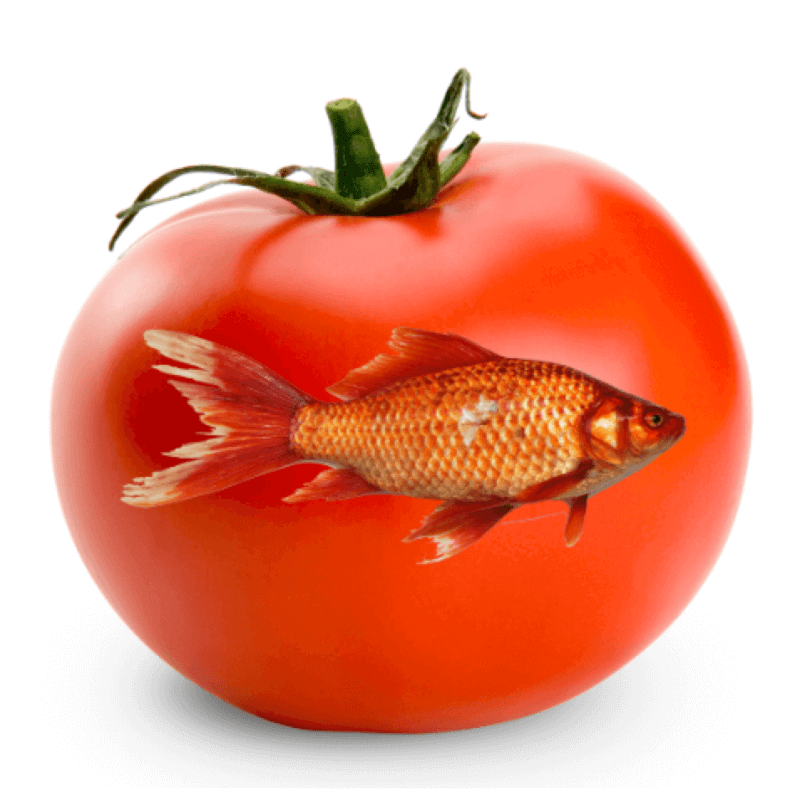
Most of the concern stems from fear. Many people find the idea of inserting a gene from a bacteria into corn repulsive — the assumption being that the corn is now contaminated by bacteria and unsafe to eat. The same fear surfaced recently when it came to light that experiments were underway to insert a fish gene into tomato plants to make tomatoes more resistant to freezing. Fishy tomatoes have a certain “ick” feeling to them, right?

The non-GMO marketing strategy is just that — marketing. That said, it is perfectly reasonable to be concerned about how our food is made. In this case, the fear is misplaced, but the scientific community needs to better communicate why GMOs are safe.

Inserting a single gene from a different organism is not unnatural. In fact, humans (and all species) have shared genes from a multitude of organisms in our DNA already — bacteria, viruses, fish, apes, and Neanderthals are some.

Inserting a fish gene into a tomato does not make a tomato “fishy” in the same way that humans cannot breathe underwater. We share some genes with fish, but that doesn’t make us fish. Indeed, a single gene can hardly be considered “part of” a specific organism at all.

Genes are not characteristic of organisms. An organism is characteristic of its combined genetic makeup.

Layla Katiraee at The Genetic Literacy Project has compiled an excellent list debunking common myths perpetuated by non-GMO activists, which you can read here.

Read full, original post: Frankenfood? The Real Science Behind GMOs

{{ reviewsTotal }}{{ options.labels.singularReviewCountLabel }}
{{ reviewsTotal }}{{ options.labels.pluralReviewCountLabel }}
{{ options.labels.newReviewButton }}
{{ userData.canReview.message }}

Related Articles

Infographic: Global regulatory and health research agencies on whether glyphosate causes cancer

Infographic: Global regulatory and health research agencies on whether glyphosate causes cancer

Does glyphosate—the world's most heavily-used herbicide—pose serious harm to humans? Is it carcinogenic? Those issues are of both legal and ...

Most Popular

Credit: ACSH
Viewpoint: Who and what’s to blame for the surge in vaccine-preventable diseases?
ChatGPT-Image-May-28-2026-12_56_54-PM
Viewpoint: Vaccines' non-specific effects? The ‘shoddy’ Danish couple whose 'research’ inspires RFK, Jr.’s health delusion
Organic-Produce
Viewpoint: Why you should ignore organic food advocates’ advice to avoid ‘pesticide soaked’ conventional fruits and vegetables
Screenshot-2026-06-05-at-2.12.30-PM
Some plants can poison you. So how did humans figure out what is safe to eat?
Screenshot-2026-06-08-at-11.05.51-AM
Can vaping lead to cancer? New ‘association study’ raises questions of “links"
ChatGPT Image Jun 3, 2026, 03_14_43 PM
Viewpoint: How Earthjustice became the poster child for the abuse of special interest activist funding
ChatGPT-Image-Jun-5-2026-01_17_48-PM
GLP-1 weight-loss drugs may reshape our desires and emotions
Screenshot-2026-06-05-at-3.30.20-PM
Republican lawmakers spread misinformation claiming solar farms permanently destroy potato farms
edb7f6d7-2370-418f-9578-74e29678e35c
Facts & Fallacies Podcast: Nicotine vaping—public health miracle, or risk to children? Professor Cliff Douglas
Screenshot-2026-06-08-at-10.19.30-AM
‘Natural’ wellness supplements linked to liver injury
ChatGPT-Image-Mar-10-2026-01_39_01-PM
Viewpoint—“Miracle molecule” debunked: Why acemannan supplements don’t work
ChatGPT-Image-May-26-2026-07_51_21-AM-2
Viewpoint: There are more than 1,000 chemicals in a cup of coffee—including many substances that can cause cancer. Why isn’t it banned?
glp menu logo outlined

Get news on human & agricultural genetics and biotechnology delivered to your inbox.