Palestinians, Jews share common genetic lineage

main qimg df bf abcb add a e b lq

The GLP aggregated and excerpted this blog/article to reflect the diversity of news, opinion and analysis. 

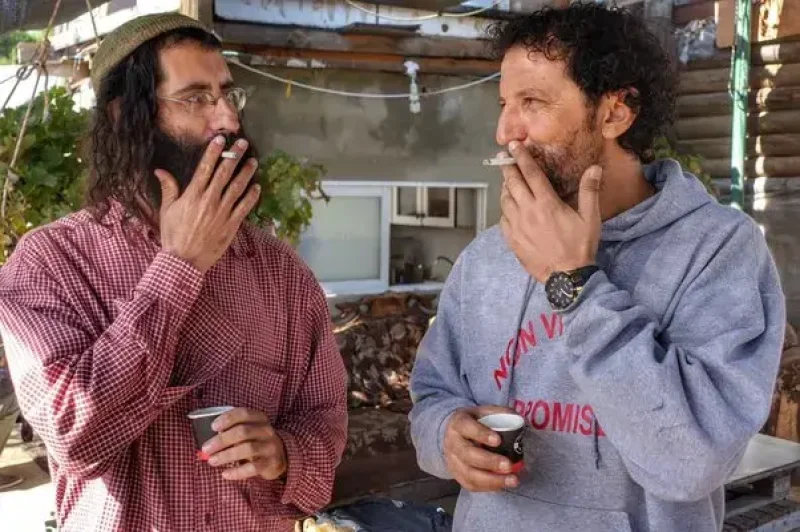
Confronted by the violence sweeping over Israel, it can be easy to overlook the things that Jews and Palestinians share: a deep attachment to the same sliver of contested land, a shared appetite for hummus, a common tradition of descent from the patriarch Abraham, and, as scientific research shows — a common genetic ancestry, as well.

Several major studies published in the past five years attest to these ancient hereditary links. At the forefront of these efforts are two researchers: Harry Ostrer, professor of pediatrics and pathology at Albert Einstein College of Medicine in the Bronx, New York, and Karl Skorecki, director of medical and research development at the Rambam Health Care Campus in Haifa. Back in June 2010, and within two days of each other, the two scientists and their research teams published extensive analyses of the genetic origins of the Jewish people and their Near East ancestry.

“The closest genetic neighbors to most Jewish groups were the Palestinians, Israeli Bedouins, and Druze in addition to the Southern Europeans, including Cypriots,” as Ostrer and Skorecki wrote in a review of their findings that they co-authored in the journal Human Genetics in October 2012.

Ostrer’s research on “Abraham’s Children in the Genome Era,” published in The American Journal of Human Genetics, sampled 652,000 gene variants from each of 237 unrelated individuals from seven Jewish populations: Iranian, Iraqi, Syrian, Italian, Turkish, Greek and Ashkenazi. These sequences were then compared with reference samples from non-Jews drawn from The Human Genome Diversity Project, a global database of genetic information gathered from populations across the world.

Read full, original post: Blood Brothers: Palestinians and Jews Share Genetic Roots

{{ reviewsTotal }}{{ options.labels.singularReviewCountLabel }}
{{ reviewsTotal }}{{ options.labels.pluralReviewCountLabel }}
{{ options.labels.newReviewButton }}
{{ userData.canReview.message }}

Related Articles

Infographic: Global regulatory and health research agencies on whether glyphosate causes cancer

Infographic: Global regulatory and health research agencies on whether glyphosate causes cancer

Does glyphosate—the world's most heavily-used herbicide—pose serious harm to humans? Is it carcinogenic? Those issues are of both legal and ...

Most Popular

ChatGPT Image May 26, 2026, 08_42_17 AM (1)
Viewpoint: Greenpeace and poison: How environmental advocacy groups rely on compliant (and often ignorant) journalists to spread disinformation and spark litigation
Screenshot 2025-07-30 at 10.48
Can gene editing eliminate Down syndrome? Scientists have done it in lab-grown cells
Screenshot-2026-05-28-at-1.36.28-PM
Viewpoint: Can mRNA research survive the Trump administration?
Screenshot-2026-06-02-at-11.59.11-AM
Magnifica Humanitas: Pope’s encyclical broadside against AI naivete and overreach
Screenshot 2025-11-18 at 3.45
Viewpoint—GMOs and sustainability: Why buying organic foods is the least environmentally-sensitive food choice—without offering any health benefits
ChatGPT-Image-May-26-2026-07_51_21-AM-2
Viewpoint: There are more than 1,000 chemicals in a cup of coffee—including many substances that can cause cancer. Why isn’t it banned?
ChatGPT-Image-Jun-2-2026-11_39_58-AM
Viewpoint: Who is RFK, Jr.’s newly-appointed CDC senior counselor, Sara Brenner — Vaccine skeptic and self-proclaimed “MAHA mom”
Picture1
Sounds we can’t hear — the hidden planetary signals behind science, fear, and misinformation
ChatGPT Image May 28, 2026, 08_16_38 PM
Viewpoint: Why the EPA mismeasures cancer risk of chemicals and what should be done to fix it
Screenshot-2026-04-14-at-11.11.06-AM
‘Turbo cancer’ or mRNA cancer cure? Strategies to counter misinformation
tick-DNA
GLP podcast: Spread meat allergy with gene-edited ticks? Bioethicists pose vile ‘thought experiment’
glp menu logo outlined

Get news on human & agricultural genetics and biotechnology delivered to your inbox.