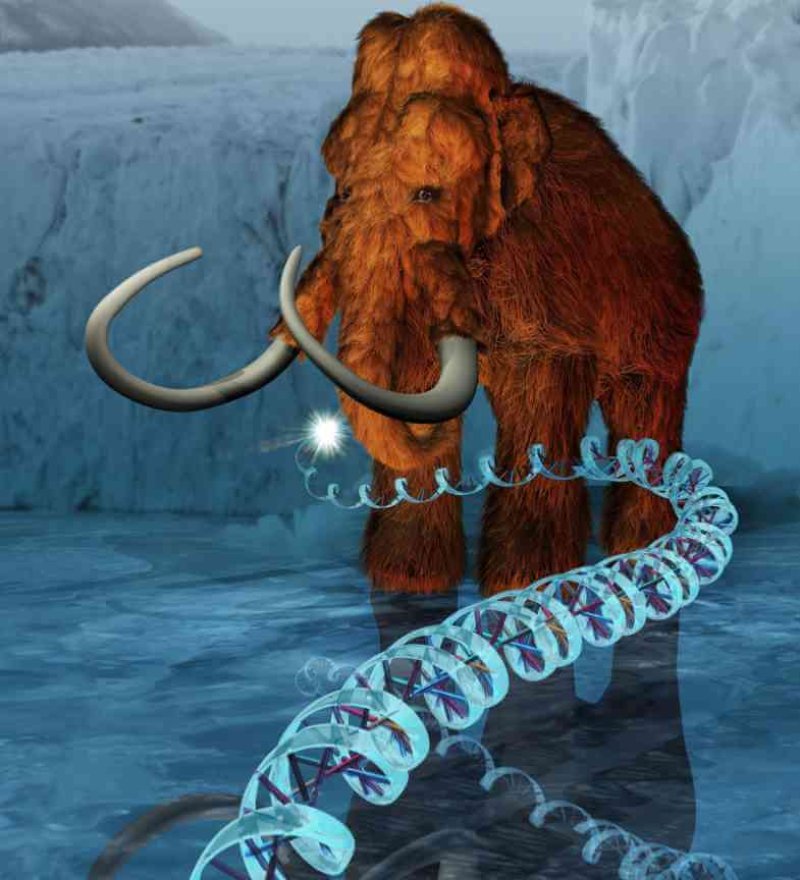
Mammoth DNA successfully resurrected, but cloning won’t happen anytime soon

c

A group of researchers are getting closer to bringing the extinct woolly mammoth back to life. Geneticist George Church’s lab at Harvard University successfully copied genes from frozen woolly mammoths and pasted them into the genome of an Asian elephant.

Using a DNA editing tool called CRISPR, the scientists spliced genes for the mammoths’ small ears, subcutaneous fat, and hair length and color into the DNA of elephant skin cells. The tissue cultures represent the first time woolly mammoth genes have been functional since the species went extinct around 4,000 years ago.

The research has not yet been peer-reviewed or published in a scientific journal “because there is more work to do,” Church told the U.K.’s Sunday Times, “but we plan to do so.”

The work is part of an effort to bring extinct species back from the dead, a process called “de-extinction”. The recent breakthrough shows that one proposed de-extinction method–which involves splicing genes from extinct animals into the genomes of their living relatives—just might work. But don’t believe the headlines suggesting woolly mammoth cloning is just around the corner. Church explained to Popular Science that there’s a lot more research to be done.

“Just making a DNA change isn’t that meaningful,” says Church. “We want to read out the phenotypes.”

To do that, the team needs to figure out how to take the flat hybrid cells from a petri dish and coax them into becoming specialized tissues—such as blood cells or liver organoids–then test to see if they behave properly. For example, do the mammoth hair genes lead to hair that’s the right color, length, and woolliness?

Read full, original article: Woolly mammoth DNA successfully spliced into elephant cells

{{ reviewsTotal }}{{ options.labels.singularReviewCountLabel }}
{{ reviewsTotal }}{{ options.labels.pluralReviewCountLabel }}
{{ options.labels.newReviewButton }}
{{ userData.canReview.message }}

Related Articles

Infographic: Global regulatory and health research agencies on whether glyphosate causes cancer

Infographic: Global regulatory and health research agencies on whether glyphosate causes cancer

Does glyphosate—the world's most heavily-used herbicide—pose serious harm to humans? Is it carcinogenic? Those issues are of both legal and ...

Most Popular

Screenshot-PM-24
Viewpoint: The herbicide glyphosate isn’t perfect. Banning it would be far worse.
d-b
Blocked arteries, kidney stones, nausea, constipation, fatigue: Long list of health problems caused by too much vitamin D 
bayer-supremecourt-lt
EPA concludes glyphosate is not carcinogenic. Missouri courts say Monsanto failed to warn it might be. SCOTUS weighs in.
ChatGPT-Image-Feb-16-2026-01_57_31-PM
Viewpoint: ‘Science-as-Satan’ unites the MAHA—MAGA movements. Is a breakup in the works?
ChatGPT-Image-Apr-22-2026-11_06_18-AM
Wellness influencer nonsense: No, nicotine does not boost cognition and productivity, but it can damage your health 
Screenshot-2026-04-27-at-12.22.38-PM
Running ‘wild’: Last year, RFK, Jr. was given a green light to ‘reform’ chemical policies. Glyphosate illustrates how Trump now has him on a tight leash, and MAHA is furious
Screenshot-2026-04-27-at-1.40.55-PM
With federal funding for scientific research already reeling, Trump fires the entire apolitical National Science Board
Screenshot-2026-04-13-at-3.54.04-PM
AI disinformation stress test: Challenges and response strategies
ChatGPT-Image-Mar-11-2026-11_58_46-AM
The Trump administration has run out more than 4,000 National Institutes of Health employees. Here are the consequences
ChatGPT-Image-Feb-16-2026-01_04_32-PM
Raw milk myth wake-up call
glp menu logo outlined

Get news on human & agricultural genetics and biotechnology delivered to your inbox.