Why do East Asians have 20% more Neanderthal DNA than Europeans?

article DD DC x

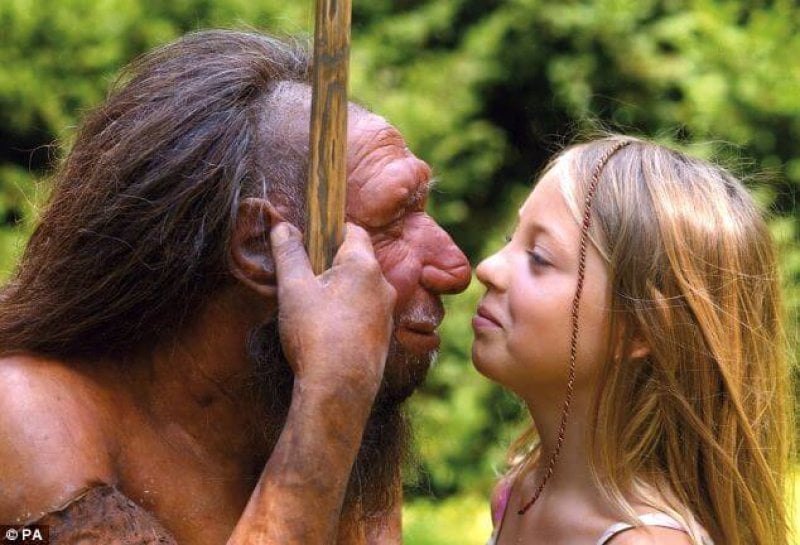
In 2010, scientists made a startling discovery about our past: About 50,000 years ago, Neanderthals interbred with the ancestors of living Europeans and Asians.ย Researchers also have found a peculiar pattern in non-Africans: People in China, Japan and other East Asian countries have about 20 percent more Neanderthal DNA than do Europeans.

Joshua M. Akey, a geneticist at the University of Washington, and the graduate student Benjamin Vernot recently set out to testย possible explanations for the comparative abundance of Neanderthal DNA in Asians. The theory that made the most sense was that Asians inherited additional Neanderthal DNA at a later time.ย In this scenario, the ancestors of Asians and Europeans split, the early Asians migrated east, and there they had a second encounter with Neanderthals.

UCLA geneticist Dr Kirk E. Lohmueller and graduate student Bernard Y. Kim approached the same genetic question, but from a different direction. They constructed a computer model of Europeans and Asians, simulating their reproduction and evolution over time. After many trials, they found thatย a model that included a second interbreeding, another โ€œpulseโ€ of Neanderthal genes into the Asian population, fit the existing data the best.

But the two-pulse hypothesis also poses a puzzle of its own. If Neanderthals became extinct 40,000 years ago, they may have disappeared before Europeans and Asian populations genetically diverged. How could there have been Neanderthals left to interbreed with Asians a second time?

Read full, original article:ย A New Theory on How Neanderthal DNA Spread in Asia

{{ reviewsTotal }}{{ options.labels.singularReviewCountLabel }}
{{ reviewsTotal }}{{ options.labels.pluralReviewCountLabel }}
{{ options.labels.newReviewButton }}
{{ userData.canReview.message }}

Related Articles

Infographic: Global regulatory and health research agencies on whether glyphosate causes cancer

Infographic: Global regulatory and health research agencies on whether glyphosate causes cancer

Does glyphosateโ€”the world's most heavily-used herbicideโ€”pose serious harm to humans? Is it carcinogenic? Those issues are of both legal and ...

Most Popular

ChatGPT Image Jun 3, 2026, 03_14_43 PM
Viewpoint: How Earthjustice became the poster child for the abuse of special interest activist funding
ChatGPT Image Jun 3, 2026, 03_54_37 PM
Viewpoint: โ€œTurn on, tune in, drop outโ€โ€”Kennedy embraces the Timothy Leary psychedelic revolution
Screenshot-2026-06-05-at-2.12.30-PM
Some plants can poison you. So how did humans figure out what is safe to eat?
ChatGPT-Image-Mar-10-2026-01_39_01-PM
Viewpointโ€”โ€œMiracle moleculeโ€ debunked: Why acemannan supplements donโ€™t work
ChatGPT-Image-Jun-11-2026-01_15_03-PM
Selective Pressure, Selective Silence
Screenshot 2026-05-26 at 10.15
Viewpoint: Double standardโ€”Why does the wellness industry get a free pass while Big Healthcare is treated as morally suspect?
ChatGPT Image Jun 1, 2026, 11_39_17 AM
Viewpoint: When food myths go viral, farmers pay the price
ChatGPT Image May 28, 2026, 08_16_38 PM
Viewpoint: Why the EPA mismeasures cancer risk of chemicals and what should be done to fix it
ChatGPT Image May 26, 2026, 08_42_17 AM (1)
Viewpoint: Greenpeace and poison: How environmental advocacy groups rely on compliant (and often ignorant) journalists to spread disinformation and spark litigation
Picture1
Sounds we canโ€™t hear โ€” the hidden planetary signals behind science, fear, and misinformation

Sorry. No data so far.

glp menu logo outlined

Get news on human & agricultural genetics and biotechnology delivered to your inbox.