This story appeared as “Attack of the Killer Regulators” in the Friday, June 6, 2014 edition of the Wall Street Journal Europe
******
Science can’t be rushed. Usually legislators make policy decisions on controversial issues only after carefully weighing current research. But just the opposite has unfolded in the EU.
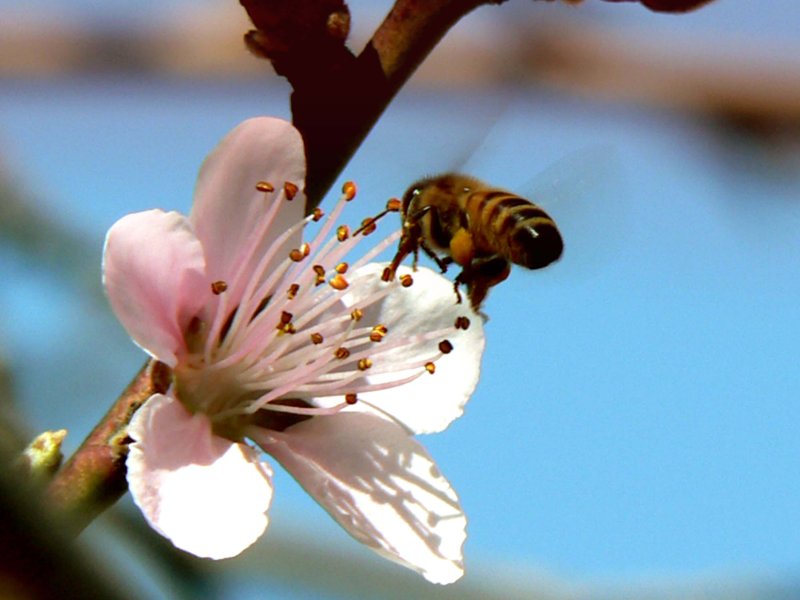
European Commissioners last year passed a two-year ban on a class of pesticides known as neonicotinoids in a preemptive move to protect honeybees, after sketchy reports of higher-than-normal winter deaths among the arthropods. Now the unintended consequences of what seems like a hasty decision are emerging.
The commission’s moratorium vote, which took effect throughout the EU in December 2013, came despite contradictory field evidence—and well before the release of a spate of new studies suggesting that bee health is now improving globally. The U.S. Department of Agriculture reported in May that bee deaths dropped more than 25 percent this past winter, and that the overall population has increased 13 percent since 2008.
According to the latest report from the Food and Agricultural Organization of the United Nations, bee populations have been steadily increasing over the past decade and have hit a record high, with the number of hives increasing even in Europe.
Yet EU officials passed the moratorium using anecdotal reports of high winter bee deaths. (Beehives regenerate quickly in the summer, so normal winter losses don’t necessarily translate into declining populations.)
Only after the EU decision did the commission complete its first-ever comprehensive study on bee health, known as Epilobee. Released in April this year, the commission’s survey focused on 17 EU states in 2012-13, when Europeans shivered through the kind of harsh winter that often decimates bee colonies. Although neonics were widely in use at the time, 11 countries accounting for 75 percent of Europe’s bees experienced winter-loss rates of only 3.5-15.3 percent during the period. That’s far better than the 18.9 percent rate that beekeepers in the U.S. say is acceptable.

According to the EU’s report: “Members States with more than 20 percent mortality rates (Belgium, Denmark, Estonia, Finland, Sweden, and U.K.) represent 6.24 percent of the surveyed population”—a tiny fraction of Europe’s bees. And in these countries, weather was identified as the culprit: “[H]igh rates of winter mortality were located in the Northern member states of the European Union suggesting a strong geographical influence probably due to climate.”
Will European policy makers revisit the moratorium in light of the new evidence? If they do not, food prices will rise along with farming costs. A working paper by the Humboldt Forum for Food and Agriculture estimated the EU ban could cost Europe €17 billion over the next five years as farmers shift to less efficient chemicals and land-use practices. The costs might be justifiable if evidence showed that neonics use was killing off honeybees.
But the EU instituted its precautionary ban without actually examining beehives—firing first and then asking questions.
To control pests, European farmers faced with the neonics ban are now being forced to turn to more toxic chemicals: organophosphates and pyrethroids, known pollinator destructors, according to a January study in the Journal of Applied Ecology. The researchers expressed particular concern that patchwork bans and moratoriums not supported by science could result in stressing bee colonies even more, leaving bees in a worse state than before the EU commission decided to intervene to save them.
Read the full, original article: Attack of the Killer Regulators
Additional Resources:
- “From GMOs to neonics, what’s causing bee deaths?” Genetic Literacy Project
- “Canada: Challenges to bee health are complex, banning neonicotinoids is not the answer,” Record